雅思话题 / 日常生活场景,2025.11.05
075清宫历史八卦 | Qing Dynasty Palace Gossip
💌 本资料由@Evelyn每日英语小红书、B站、抖音同名精心整理制作,可添加VX:evelyn_daily交流建议,感谢支持~
视频链接
小红书:39 【兴趣是最好的老师👂一场瓜吃下来历史也学了英语也学了(英语也来添如乱 野史 清朝 - Evelyn的语言日记 | 小红书 - 你的生活兴趣社区】 😆 TzJtoIM6Yv74CGB 😆 [https://www.xiaohongshu.com/discovery/item/690c7f2b00000000030138f7?source=webshare&xhsshare=pc_web&xsec_token=ABVirbY8ZSrSDfkBEANI0VR9G5PMZr9kS6Pc9UlDFFjL8=&xsec_source=pc_share](https://www.xiaohongshu.com/discovery/item/690c7f2b00000000030138f7?source=webshare&xhsshare=pc_web&xsec_token=ABVirbY8ZSrSDfkBEANI0VR9G5PMZr9kS6Pc9UlDFFjL8=&xsec_source=pc_share)
b站:【用英语吃瓜吧╮(¯▽¯)╭(添如乱】 [https://www.bilibili.com/video/BV18p2FBhEKo/?share_source=copy_web&vd_source=e6c955a1262a936ef61a7618eff4be4b](https://www.bilibili.com/video/BV18p2FBhEKo/?share_source=copy_web&vd_source=e6c955a1262a936ef61a7618eff4be4b)
🎯 单词串联带背
💡 假装你是小老师!读一遍以下内容吧~遇到不会的表达记得展开看看解释,顺一遍下来真的能学会很多!
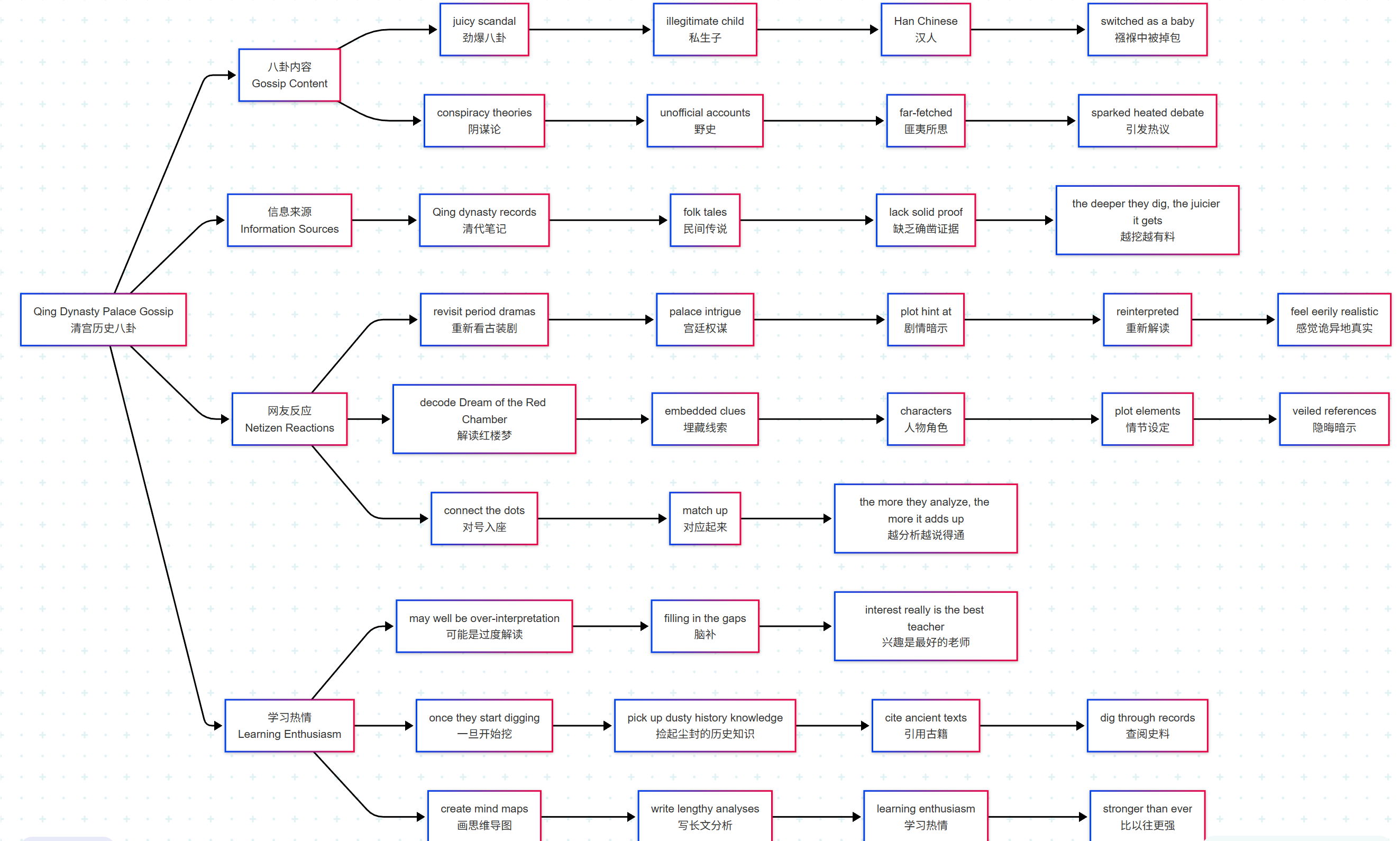
作为一个吃瓜群众gossip enthusiast,你最近肯定在各大社交平台上刷到了关于清朝皇室的大瓜juicy scandal!今天我们就来边学单词边吃瓜dive into the gossip,看看这个疯传的go viral历史八卦到底是怎么回事!
💡 词汇解释
- Gossip Enthusiast /ˈɡɒs.ɪp ɪnˈθjuː.zi.æst/:吃瓜群众;热衷八卦的旁观者。Enthusiast 指"热衷者"。也可以说 spectator(旁观者、看客)。
- Juicy Scandal /ˈdʒuː.si ˈskæn.dəl/:大瓜;劲爆八卦。Juicy 原意"多汁的",引申为"有料的、劲爆的"。也可以说 bombshell(重磅消息、爆炸性新闻)。
- Dive Into The Gossip /daɪv ˈɪn.tuː ðə ˈɡɒs.ɪp/:边学单词边吃瓜;深入八卦。Dive into 表示"深入探究"。
- Go Viral /ɡəʊ ˈvaɪə.rəl/:疯传;在网上爆红。Viral 源自 virus(病毒),形容信息像病毒一样快速扩散。也可以说 take the internet by storm(迅速风靡、征服网络)。
简单概括here's the tea:这个瓜主要说的是两件事——第一,康熙皇帝可能不是顺治的儿子,而是孝庄太后和降清大臣洪承畴的私生子illegitimate child;第二,乾隆皇帝其实是汉人Han Chinese,在襁褓中as a baby被掉包switched at birth进了皇宫。这些野史unofficial accounts和阴谋论conspiracy theories听起来匪夷所思far-fetched,但在网上引发了热议sparked heated debate!
💡 词汇解释
- Here's The Tea /hɪəz ðə tiː/:简单概括;要点。"Here's the tea" 是网络流行语,tea 在俚语中指"八卦、内幕消息"。也可以说 the lowdown(真相、内情)。
- Illegitimate Child /ˌɪl.ɪˈdʒɪt.ɪ.mət tʃaɪld/:私生子;非婚生子女。Illegitimate 指"不合法的、非婚生的"。委婉说法是 love child。
- Han Chinese /hæn tʃaɪˈniːz/:汉人;汉族。
- As A Baby /æz ə ˈbeɪ.bi/:在襁褓中;婴儿时期。更正式的说法是 in infancy(婴儿期、初期)。
- Switched At Birth /swɪtʃt æt bɜːθ/:出生时被调换;掉包。这是固定搭配,常见于描述身份错位的情节。也可以简单说 swapped。
- Unofficial Accounts /ˌʌn.əˈfɪʃ.əl əˈkaʊnts/:野史;非官方记载。也可以说 folklore(民间传说、民俗)。
- Conspiracy Theories /kənˈspɪr.ə.si ˈθɪə.riz/:阴谋论;关于秘密阴谋的推测。Conspiracy 指"共谋、阴谋"。
- Far-fetched /ˌfɑːˈfetʃt/:匪夷所思的;离谱的。字面意思"从远处取来的",引申为"牵强附会的、不太可能的"。也可以说 wild(疯狂的、难以置信的)。
- Sparked Heated Debate /spɑːkt ˈhiː.tɪd dɪˈbeɪt/:引发热议;激起激烈讨论。Spark 指"点燃、引发"。也可以说 set the internet ablaze(在网上炸开了锅)。
这些说法源于stem from一些清代笔记Qing dynasty records和民间传说folk tales,虽然缺乏确凿证据lack solid proof,但网友们越扒越有料the deeper they dig, the juicier it gets!
💡 词汇解释
- Stem From /stem frɒm/:源于;起源于。强调"由...产生"。更正式的说法是 originate from。
- Qing Dynasty Records /tʃɪŋ ˈdaɪ.nə.sti ˈrek.ɔːdz/:清代笔记;清朝时期的文献记录。
- Folk Tales /fəʊk teɪlz/:民间传说;口口相传的故事。也可以说 oral traditions(口述传统,强调代代相传)。
- Lack Solid Proof /læk ˈsɒl.ɪd pruːf/:缺乏确凿证据;没有可靠的证明。
- The Deeper They Dig, The Juicier It Gets /ðə ˈdiː.pər ðeɪ dɪɡ ðə ˈdʒuː.si.ər ɪt ɡets/:越扒越有料;挖得越深越劲爆。juicier 呼应前面的 juicy scandal。
更有意思的是,网友们开始往回看revisit各种清宫剧period dramas,发现很多剧情plot好像暗示hint at这些传闻。《甄嬛传》里的宫廷权谋palace intrigue,都被重新解读reinterpreted了。大家开始觉得,这些电视剧拍得有点像真的feel eerily realistic。
💡 词汇解释
- Revisit /ˌriːˈvɪz.ɪt/:往回看;重新审视。强调"重新审视、再次关注"。也可以说 look back at。
- Period Dramas /ˈpɪə.ri.əd ˈdrɑː.məz/:古装剧;历史剧。指"时代剧"。也可以说 historical dramas(更直白)。
- Plot /plɒt/:剧情;故事情节。也可以说 storyline(故事主线)。
- Hint At /hɪnt æt/:暗示;透露线索。也可以说 drop hints about(更口语化,强调"有意无意地透露")。
- Palace Intrigue /ˈpæl.ɪs ɪnˈtriːɡ/:宫廷权谋;宫廷阴谋。Intrigue 指"阴谋、密谋"。也可以说 court politics(朝廷政治)。
- Reinterpreted /ˌriː.ɪnˈtɜː.prɪ.tɪd/:重新解读;赋予新含义。也可以说 given new meaning(被赋予了新的意义)。
- Feel Eerily Realistic /fiːl ˈɪə.rɪ.li ˌrɪə.lɪˈstɪk/:拍得有点像真的;感觉诡异地真实。Eerily 指"诡异地、令人不安地"。也可以说 seem surprisingly authentic(显得出人意料地真实)。
最劲爆的mind-blowing是,有人开始解读decode《红楼梦》,说曹雪芹其实在书里隐喻embedded clues about清朝皇室的这些秘密!书中的人物角色characters、情节设定plot elements都被认为是影射veiled references to真实历史。网友们对号入座connect the dots,把书中的人物都和历史人物联系起来match up with,越看越觉得有道理the more they analyze, the more it adds up!
💡 词汇解释
- Mind-blowing /ˈmaɪnd.bləʊ.ɪŋ/:劲爆的;震撼的。指"令人震惊的"。也可以说 jaw-dropping(字面意思"下巴掉下来",形容极度震惊)。
- Decode /ˌdiːˈkəʊd/:解读;破译。强调"破译密码"。也可以说 analyze(分析)。
- Embedded Clues About /ɪmˈbed.ɪd kluːz əˈbaʊt/:隐喻;暗藏线索。指"嵌入的线索"。也可以说 alluded to(暗指、影射)。
- Characters /ˈkær.ək.tərz/:人物角色;书中人物。
- Plot Elements /plɒt ˈel.ɪ.mənts/:情节设定;故事元素。
- Veiled References To /veɪld ˈref.ər.əns.ɪz tuː/:影射;隐晦的暗示。Veiled 指"遮掩的、隐晦的"。也可以说 coded messages about(加密的信息)。
- Connect The Dots /kəˈnekt ðə dɒts/:对号入座;找出联系。这是习语,指"把线索串联起来"。也可以说 draw parallels(找相似之处)。
- Match Up With /mætʃ ʌp wɪð/:联系起来;对应上。更口语化,强调"配对、对应"。也可以说 link to。
- The More They Analyze, The More It Adds Up /ðə mɔː ðeɪ ˈæn.əl.aɪz ðə mɔː ɪt ædz ʌp/:越看越觉得有道理;越分析越说得通。Add up 是习语,指"合情合理、说得通"。
尽管这个瓜有可能是may well be一些过度解读over-interpretation和脑补filling in the gaps,但不得不说,兴趣果然是最好的老师interest really is the best teacher!大家吃起瓜来once they start digging,连尘封的历史知识dusty history knowledge都重新捡起来了pick up again。有人引经据典cite ancient texts,有人查阅史料dig through records,有人画思维导图create mind maps,还有人写长文分析write lengthy analyses,这种学习热情learning enthusiasm简直比上学时候还高涨stronger than ever!
💡 词汇解释
- May Well Be /meɪ wel biː/:很有可能是;十之八九是。语气更委婉的说法是 could very well be。
- Over-interpretation /ˌəʊ.vər.ɪnˌtɜː.prɪˈteɪ.ʃən/:过度解读;过分诠释。更口语化的说法是 reading too much into it(习语)。
- Filling In The Gaps /ˈfɪl.ɪŋ ɪn ðə ɡæps/:脑补;自行补充想象。指"填补空白"。也可以说 connecting dots that aren't there(强行建立不存在的联系)。
- Interest Really Is The Best Teacher /ˈɪn.trəst ˈrɪə.li ɪz ðə best ˈtiː.tʃər/:兴趣果然是最好的老师;好奇心是强大的动力。Really 比 indeed 更口语化。也可以说 curiosity is a powerful motivator。
- Once They Start Digging /wʌns ðeɪ stɑːt ˈdɪɡ.ɪŋ/:吃起瓜来;一旦开始深挖。也可以说 when they get into the gossip(开始投入、着迷于)。
- Dusty History Knowledge /ˈdʌs.ti ˈhɪs.tər.i ˈnɒl.ɪdʒ/:尘封的历史知识;积灰的历史知识。Dusty 指"布满灰尘的、被遗忘的"。捡起落灰的历史书可以说:dust off the history book
- Pick Up Again /pɪk ʌp əˈɡen/:重新捡起来;重新学习。简洁明了的表达。
- Cite Ancient Texts /saɪt ˈeɪn.ʃənt teksts/:引经据典;引用古籍。也可以说 quote historical sources(引用历史资料,quote 比 cite 更口语化)。
- Dig Through Records /dɪɡ θruː ˈrek.ɔːdz/:查阅史料;翻查记录。Dig through 比 consult 更生动,强调"仔细翻找"。
- Create Mind Maps /kriˈeɪt maɪnd mæps/:画思维导图;制作思维导图。Mind map 是常用的学习工具,用于整理和可视化信息。
- Write Lengthy Analyses /raɪt ˈleŋ.θi əˈnæl.ɪ.siːz/:写长文分析;撰写详细分析。也可以说 pen lengthy posts(撰写长帖,posts 指"帖子",更符合网络语境)。
- Learning Enthusiasm /ˈlɜː.nɪŋ ɪnˈθjuː.zi.æz.əm/:学习热情;求知热情。也可以说 passion for knowledge(Passion 比 enthusiasm 更强烈)。
- Stronger Than Ever /ˈstrɒŋ.ɡər ðən ˈev.ər/:高涨的;比以往更强烈。这是习语,比 high/intense 更地道。也可以说 more intense than in school(比上学时还强烈)。
🎬 场景描述速记单词(含填空练习)
场景:The Juicy Gossip Drops (重磅八卦!)
🎬 场景描述
💡 试着用华裔口气读一遍,你会发现什么是邪修速记单词0:00 / --:--
天哪你知道吗,最近有个超级juicy劲爆的scandal八卦在网上都viral疯传了!作为一个gossip enthusiast吃瓜群众,我必须跟你分享一下!Here's the tea简单说:这个瓜说的是那位太后可能跟一个大臣有个illegitimate child私生子,然后这孩子后来当了皇帝!还有另一个皇帝其实是Han Chinese汉族人,在他as a baby在襁褓中的时候就被switched掉包进了皇宫!这些unofficial非官方的accounts记载和conspiracy theories阴谋论听起来超级far-fetched匪夷所思是吧,但在网上sparked引发了heated debate热议!
这些说法stem from源于一些Qing dynasty清代的records笔记和folk tales民间传说,虽然lack缺乏solid proof确凿证据,但网友们真的是越dig扒越juicier(有料)!更有意思的是,大家开始revisit重新看各种period dramas清宫剧,发现很多plot剧情好像在hint at暗示这些传闻!那些palace intrigue宫廷权谋的戏都被reinterpreted重新解读了,大家开始觉得这些剧拍得有点eerily realistic诡异地真实!
0:00 / --:--还有mind-blowing劲爆的,有人开始decode解读《红楼梦》,说作者其实在书里embedded埋了很多有关皇室秘密的clues线索!书中的characters人物角色、plot elements情节设定都被认为是veiled references隐晦暗示真实历史。网友们在connect the dots对号入座,把书中的人物和历史人物match up对应起来,真的是the more they analyze, the more it adds up越分析越说得通!
尽管这个瓜may well be很可能是一些over-interpretation过度解读和filling in the gaps脑补,但不得不说,interest兴趣果然是最好的teacher老师!大家一旦start digging吃起瓜来/深挖起来,连dusty尘封的history knowledge历史知识都重新pick up捡起来了。有人cite引用ancient texts古籍,有人dig through records查阅史料,有人create mind maps画思维导图,还有人write lengthy analyses写长文分析,这种learning enthusiasm学习热情简直stronger than ever比以往更强!
📚 本场景词汇表
💡 系统学单词啦~
| 单词 | 词性 | 音标 | 释义 | 例句 |
|---|---|---|---|---|
| gossip | n. | /ˈɡɒs.ɪp/ | 八卦;闲话 近义 rumor, hearsay 反义 fact, truth | I love hearing the latest gossip. 我喜欢听最新的八卦。 |
| enthusiast | n. | /ɪnˈθjuː.zi.æst/ | 热衷者;爱好者 近义 fan, devotee 反义 critic, hater | She's a real music enthusiast. 她是真正的音乐爱好者。 |
| juicy | adj. | /ˈdʒuː.si/ | 劲爆的;有料的 近义 exciting, sensational 反义 boring, dull | That's some juicy gossip! 那是很劲爆的八卦! |
| scandal | n. | /ˈskæn.dəl/ | 丑闻;八卦 近义 controversy, outrage 反义 honor, virtue | The scandal shocked everyone. 这个丑闻震惊了所有人。 |
| viral | adj. | /ˈvaɪə.rəl/ | 病毒式传播的 近义 trending, widespread 反义 unknown, obscure | The video went viral overnight. 这个视频一夜之间疯传。 |
| tea | n. | /tiː/ | 八卦(俚语) 近义 gossip, scoop 反义 silence, secret | Spill the tea! 快说八卦! |
| illegitimate | adj. | /ˌɪl.ɪˈdʒɪt.ɪ.mət/ | 非婚生的;不合法的 近义 unlawful, illegal 反义 legitimate, legal | He was an illegitimate child. 他是个私生子。 |
| child | n. | /tʃaɪld/ | 孩子 近义 kid, offspring 反义 adult, parent | She has three children. 她有三个孩子。 |
| Han | adj. | /hæn/ | 汉族的 | Han Chinese culture is rich. 汉族文化很丰富。 |
| Chinese | adj./n. | /tʃaɪˈniːz/ | 中国的;中国人 | I'm learning Chinese. 我在学中文。 |
| baby | n. | /ˈbeɪ.bi/ | 婴儿 近义 infant, newborn 反义 adult, grown-up | The baby is sleeping. 婴儿在睡觉。 |
| switched | v. | /swɪtʃt/ | 调换;交换 近义 swapped, exchanged 反义 kept, maintained | They switched the babies at birth. 他们在出生时调换了婴儿。 |
| birth | n. | /bɜːθ/ | 出生 近义 delivery, childbirth 反义 death | She gave birth yesterday. 她昨天生了。 |
| unofficial | adj. | /ˌʌn.əˈfɪʃ.əl/ | 非官方的 近义 informal, unauthorized 反义 official, formal | This is unofficial information. 这是非官方信息。 |
| accounts | n. | /əˈkaʊnts/ | 记载;说法 近义 records, reports | Historical accounts vary. 历史记载各不相同。 |
| conspiracy | n. | /kənˈspɪr.ə.si/ | 阴谋 近义 plot, scheme 反义 truth, fact | It's just a conspiracy theory. 这只是阴谋论。 |
| theories | n. | /ˈθɪə.riz/ | 理论 近义 hypotheses, ideas 反义 facts, proofs | Scientists test their theories. 科学家检验他们的理论。 |
| far-fetched | adj. | /ˌfɑːˈfetʃt/ | 牵强附会的;不太可能的 近义 implausible, unlikely 反义 believable, realistic | That story sounds far-fetched. 那个故事听起来很牵强。 |
| sparked | v. | /spɑːkt/ | 引发;点燃 近义 triggered, ignited 反义 extinguished, stopped | The news sparked debate. 这个新闻引发了辩论。 |
| heated | adj. | /ˈhiː.tɪd/ | 激烈的 近义 intense, passionate 反义 calm, mild | They had a heated argument. 他们激烈争论。 |
| debate | n. | /dɪˈbeɪt/ | 辩论;讨论 近义 discussion, argument 反义 agreement, consensus | The debate lasted hours. 辩论持续了几个小时。 |
| stem | v. | /stem/ | 源于;起源于 近义 originate, arise 反义 end, conclude | The problem stems from miscommunication. 问题源于沟通不畅。 |
| dynasty | n. | /ˈdaɪ.nə.sti/ | 朝代 近义 reign, empire | The Ming dynasty was powerful. 明朝很强大。 |
| records | n. | /ˈrek.ɔːdz/ | 记录;文献 近义 documents, archives | Keep records of everything. 记录所有事情。 |
| folk | adj. | /fəʊk/ | 民间的 近义 traditional, popular 反义 official, formal | Folk tales are passed down orally. 民间故事口口相传。 |
| tales | n. | /teɪlz/ | 故事;传说 近义 stories, narratives 反义 facts, truths | Fairy tales are for children. 童话故事是给孩子的。 |
| lack | v. | /læk/ | 缺乏 近义 need, want 反义 have, possess | They lack evidence. 他们缺乏证据。 |
| solid | adj. | /ˈsɒl.ɪd/ | 确凿的;可靠的 近义 firm, strong 反义 weak, flimsy | We need solid proof. 我们需要确凿的证据。 |
| proof | n. | /pruːf/ | 证据;证明 近义 evidence, verification 反义 doubt, uncertainty | Show me proof. 给我看证据。 |
| dig | v. | /dɪɡ/ | 挖掘;深究 近义 excavate, investigate 反义 cover, hide | Don't dig too deep. 别挖太深。 |
| revisit | v. | /ˌriːˈvɪz.ɪt/ | 重新审视;再次访问 近义 review, reconsider 反义 ignore, forget | Let's revisit this topic. 让我们重新审视这个话题。 |
| period | n. | /ˈpɪə.ri.əd/ | 时期;时代 近义 era, age | The Victorian period was fascinating. 维多利亚时期很迷人。 |
| dramas | n. | /ˈdrɑː.məz/ | 戏剧;电视剧 近义 plays, shows 反义 comedies | I love historical dramas. 我喜欢历史剧。 |
| plot | n. | /plɒt/ | 剧情;情节 近义 storyline, narrative | The plot was confusing. 剧情很混乱。 |
| hint | v. | /hɪnt/ | 暗示 近义 suggest, imply 反义 state, declare | She hinted at the truth. 她暗示了真相。 |
| palace | n. | /ˈpæl.ɪs/ | 宫殿 近义 castle, manor 反义 hut, shack | The palace was magnificent. 宫殿很宏伟。 |
| intrigue | n. | /ɪnˈtriːɡ/ | 阴谋;权谋 近义 conspiracy, scheme 反义 honesty, openness | Political intrigue is common. 政治阴谋很常见。 |
| reinterpreted | v. | /ˌriː.ɪnˈtɜː.prɪ.tɪd/ | 重新解读 近义 reconsidered, revised 反义 maintained, kept | They reinterpreted the text. 他们重新解读了文本。 |
| eerily | adv. | /ˈɪə.rɪ.li/ | 诡异地;令人不安地 近义 strangely, weirdly 反义 normally, ordinarily | It was eerily quiet. 诡异地安静。 |
| realistic | adj. | /ˌrɪə.lɪˈstɪk/ | 真实的;现实的 近义 lifelike, authentic 反义 unrealistic, fake | The movie was very realistic. 这部电影很真实。 |
| mind-blowing | adj. | /ˈmaɪnd.bləʊ.ɪŋ/ | 令人震惊的 近义 amazing, astonishing 反义 boring, ordinary | The discovery was mind-blowing. 这个发现令人震惊。 |
| decode | v. | /ˌdiːˈkəʊd/ | 解读;破译 近义 decipher, interpret 反义 encode, encrypt | Can you decode this message? 你能解读这条信息吗? |
| embedded | adj. | /ɪmˈbed.ɪd/ | 嵌入的;植入的 近义 inserted, implanted 反义 removed, extracted | The chip is embedded in the card. 芯片嵌入在卡里。 |
| clues | n. | /kluːz/ | 线索 近义 hints, evidence | Look for clues. 寻找线索。 |
| characters | n. | /ˈkær.ək.tərz/ | 人物;角色 近义 figures, personas | The characters were well-developed. 人物塑造得很好。 |
| elements | n. | /ˈel.ɪ.mənts/ | 元素;要素 近义 components, parts 反义 whole | What are the key elements? 关键要素是什么? |
| veiled | adj. | /veɪld/ | 隐晦的;遮掩的 近义 hidden, concealed 反义 obvious, clear | It was a veiled threat. 这是隐晦的威胁。 |
| references | n. | /ˈref.ər.əns.ɪz/ | 引用;暗指 近义 allusions, mentions | The book contains many references. 这本书包含很多引用。 |
| connect | v. | /kəˈnekt/ | 连接;联系 近义 link, join 反义 disconnect, separate | Connect the dots. 把线索串联起来。 |
| dots | n. | /dɒts/ | 点;要点 近义 points, spots | I can't connect the dots. 我无法把线索串起来。 |
| match | v. | /mætʃ/ | 匹配;对应 近义 correspond, fit 反义 clash, differ | These colors match perfectly. 这些颜色完美匹配。 |
| analyze | v. | /ˈæn.əl.aɪz/ | 分析 近义 examine, study 反义 ignore, overlook | Let's analyze the data. 让我们分析数据。 |
| over-interpretation | n. | /ˌəʊ.vər.ɪnˌtɜː.prɪˈteɪ.ʃən/ | 过度解读 近义 overanalysis 反义 underinterpretation | That's over-interpretation. 那是过度解读。 |
| filling | v. | /ˈfɪl.ɪŋ/ | 填补 近义 completing, adding 反义 emptying, removing | Stop filling in the gaps. 别脑补了。 |
| gaps | n. | /ɡæps/ | 空白;缺口 近义 holes, spaces 反义 completeness | There are gaps in the story. 故事有空白。 |
| interest | n. | /ˈɪn.trəst/ | 兴趣 近义 curiosity, fascination 反义 boredom, disinterest | I have no interest in sports. 我对运动没兴趣。 |
| teacher | n. | /ˈtiː.tʃər/ | 老师;导师 近义 instructor, educator 反义 student, pupil | She's a great teacher. 她是个好老师。 |
| dusty | adj. | /ˈdʌs.ti/ | 布满灰尘的;被遗忘的 近义 dirty, neglected 反义 clean, fresh | The books were dusty. 书上都是灰。 |
| knowledge | n. | /ˈnɒl.ɪdʒ/ | 知识 近义 information, learning 反义 ignorance | Knowledge is power. 知识就是力量。 |
| pick | v. | /pɪk/ | 拾起;选择 近义 choose, select 反义 drop, leave | Pick up the phone. 接电话。 |
| cite | v. | /saɪt/ | 引用;引证 近义 quote, reference 反义 ignore | Cite your sources. 引用你的来源。 |
| ancient | adj. | /ˈeɪn.ʃənt/ | 古代的 近义 old, antique 反义 modern, new | Ancient civilizations fascinate me. 古代文明让我着迷。 |
| texts | n. | /teksts/ | 文本;典籍 近义 writings, documents | Read the original texts. 阅读原文。 |
| create | v. | /kriˈeɪt/ | 创建;制作 近义 make, produce 反义 destroy, demolish | Let's create a plan. 让我们制定计划。 |
| mind | n. | /maɪnd/ | 思维;头脑 近义 brain, intellect | Use your mind. 动动脑筋。 |
| maps | n. | /mæps/ | 地图;导图 近义 charts, diagrams | Mind maps help organize ideas. 思维导图帮助整理想法。 |
| lengthy | adj. | /ˈleŋ.θi/ | 冗长的;详尽的 近义 long, extended 反义 brief, short | It was a lengthy discussion. 这是一场冗长的讨论。 |
| analyses | n. | /əˈnæl.ɪ.siːz/ | 分析(复数) 近义 examinations, studies | Their analyses were thorough. 他们的分析很彻底。 |
| learning | n. | /ˈlɜː.nɪŋ/ | 学习 近义 education, study 反义 ignorance | Learning never stops. 学习永无止境。 |
| enthusiasm | n. | /ɪnˈθjuː.zi.æz.əm/ | 热情 近义 passion, zeal 反义 apathy, indifference | Her enthusiasm is contagious. 她的热情很有感染力。 |
| stronger | adj. | /ˈstrɒŋ.ɡər/ | 更强的 近义 more powerful 反义 weaker | I feel stronger now. 我现在感觉更强了。 |
✏️ 填空练习
💡 ok前面学了那么多,这下来真的了,你可以的!先自己试着填一下然后听音频~0:00 / --:--
Oh my god, you know what? There's this super 劲爆 八卦 that's gone totally 疯传 online! As a total 吃瓜群众, I gotta share this with you! So 简单说: this gossip claims that empress dowager might've had an 私生子 with some minister, and that kid ended up becoming emperor! And there's another emperor who was actually 汉人, and when he was 在襁褓中, he got 掉包 into the palace! These 非官方 记载 and 阴谋论 sound totally 匪夷所思, but they've 引发 so much 热议 online!
These claims 源于 some 清代 笔记 and 民间传说, and even though they 缺乏 确凿证据, netizens keep 扒 and it just gets 有料! What's even more interesting is that people started 重新看 all these 清宫剧, and they're finding that tons of the 剧情 seems to 暗示 these rumors! All that 宫廷权谋 stuff is being 重新解读, and people are starting to feel like these shows are 诡异地真实!
And what's really 劲爆 is that some people started 解读 "Dream of the Red Chamber," saying the author actually 埋 so many 线索 about these royal secrets in the book! The 人物角色 and 情节设定 are all being seen as 隐晦暗示 to real history. Netizens are 对号入座, 对应起来 the book characters with historical figures, and honestly 越分析越说得通!
Even though this gossip 很可能是 some 过度解读 and 脑补, I gotta say, 兴趣 really is the best 老师! Once people 吃起瓜来/深挖起来, they're even 捡起来 their 尘封 历史知识! Some people 引用 古籍, some 查阅史料, some 画思维导图, and others 写长文分析 - this 学习热情 is honestly 比以往更强!
🗣️ 完整口语版本
💡 都填出来了的话就跟读一遍吧,加深印象~0:00 / --:--
Oh my god, you know what? There's this super juicy scandal that's gone totally viral online! As a total gossip enthusiast, I gotta share this with you! So here's the teathis gossip claims that empress dowager might've had an illegitimate child with some minister, and that kid ended up becoming emperor! And there's another emperor who was actually Han Chinese, and when he was as a baby, he got switched into the palace! These unofficial accounts and conspiracy theories sound totally far-fetched, but they've sparked so much heated debate online!
哦天哪,你知道吗?网上有个超级劲爆的八卦都疯传了!作为一个彻底的吃瓜群众,我必须跟你分享一下!所以简单说:这个八卦说的是某位太后可能跟某个大臣有个私生子,然后那个孩子最后当了皇帝!还有另一个皇帝其实是汉人,在他还是婴儿的时候就被掉包进了皇宫!这些非官方的记载和阴谋论听起来完全匪夷所思,但它们引发了好多激烈辩论!
These claims stem from some Qing dynasty records and folk tales, and even though they lack solid proof, netizens keep digging and it just gets juicier! What's even more interesting is that people started revisiting all these period dramas, and they're finding that tons of the plot seems to hint at these rumors! All that palace intrigue stuff is being reinterpreted, and people are starting to feel like these shows are eerily realistic!
这些说法源于一些清代的笔记和民间传说,虽然它们缺乏确凿证据,但网友们不断挖,而且越来越有料!更有意思的是,人们开始重新看所有这些古装剧,他们发现好多剧情似乎在暗示这些传闻!所有那些宫廷权谋的东西都被重新解读了,人们开始觉得这些剧诡异地真实!
And what's really mind-blowing is that some people started decoding "Dream of the Red Chamber," saying the author actually embedded so many clues about these royal secrets in the book! The characters and plot elements are all being seen as veiled references to real history. Netizens are connecting the dots, matching up the book characters with historical figures, and honestly the more they analyze, the more it adds up!
Even though this gossip may well be some over-interpretation and filling in the gaps, I gotta say, interest really is the best teacher! Once people start digging, they're even picking up their dusty history knowledge! Some people cite ancient texts, some dig through records, some create mind maps, and others write lengthy analyses - this learning enthusiasm is honestly stronger than ever!
真正令人震惊的是,有些人开始解读《红楼梦》,说作者其实在书里埋了好多关于这些皇室秘密的线索!人物角色和情节设定都被视为对真实历史的隐晦暗示。网友们在串联线索,把书中人物和历史人物对应起来,说实话越分析越说得通!尽管这个八卦很可能是一些过度解读和脑补,但我不得不说,兴趣真的是最好的老师!一旦人们开始挖,他们甚至捡起了他们尘封的历史知识!有些人引用古籍,有些人查阅史料,有些人画思维导图,还有人写长篇分析——这种学习热情真的比以往更强!
💬 Small Talk 口语版
💡 和朋友来演一遍吧~也可以自己脑内剧场solo0:00 / --:--
A: Girl, have you seen that crazy gossip that's been going viral online lately? 姐们儿,你看到最近网上疯传的那个疯狂八卦了吗?
B: Oh my god, yes! You mean that juicy scandal about the Qing Dynasty emperors? I'm such a gossip enthusiast, I couldn't resist! 哦天哪,看到了!你是说那个关于清朝皇帝的劲爆八卦吗?我是个吃瓜群众,根本忍不住!
A: Right?! So here's the tea - apparently one emperor might've been an illegitimate child, and another was supposedly Han Chinese who got switched into the palace as a baby. Like, how wild is that? 对吧?!所以简单说——显然有个皇帝可能是个私生子,另一个据说是汉人,还是婴儿的时候就被掉包进了皇宫。这有多疯狂啊?
B: I know! These conspiracy theories sound totally far-fetched, but they've sparked such heated debate online. Everyone's going nuts over it! 我知道!这些阴谋论听起来完全匪夷所思,但它们在网上引发了如此激烈的辩论。每个人都为此疯狂!
A: Yeah, and apparently these stories stem from some old Qing dynasty records and folk tales. Though they totally lack solid proof, right? 是的,而且显然这些故事源于一些古老的清代笔记和民间传说。虽然它们完全缺乏确凿证据,对吧?
B: Exactly! But the deeper they dig, the juicier it gets! People are revisiting all those period dramas now, like "Empresses in the Palace." They're finding that the plot seems to hint at these rumors! 没错!但是越挖越有料!人们现在重新看所有那些古装剧,比如《甄嬛传》。他们发现剧情似乎在暗示这些传闻!
A: No way! So all that palace intrigue stuff is being reinterpreted? That's insane! 不会吧!所以所有那些宫廷权谋的东西都被重新解读了?太疯狂了!
B: Yeah! People are saying these shows feel eerily realistic now. But get this - the most mind-blowing part is that some folks started decoding "Dream of the Red Chamber"! 是的!人们说这些剧现在感觉诡异地真实。但听好了——最劲爆的部分是有些人开始解读《红楼梦》!
A: Wait, what? The classic novel? 等等,什么?那本经典小说?
B: Yes! They're claiming the author embedded clues about royal secrets in the book. All the characters and plot elements are supposedly veiled references to real history. People are connecting the dots and matching up the book characters with historical figures! 是的!他们声称作者在书里埋了关于皇室秘密的线索。所有的人物角色和情节设定据说都是对真实历史的隐晦暗示。人们在串联线索,把书中人物和历史人物对应起来!
A: Damn! And does it actually make sense? 天哪!那真的说得通吗?
B: Well, people are saying the more they analyze, the more it adds up! Though honestly, it may well be just over-interpretation and filling in the gaps, y'know? 嗯,人们说越分析越说得通!虽然说实话,这很可能只是过度解读和脑补,你懂的?
A: For sure. But I gotta say, interest really is the best teacher! Once they start digging, people are even picking up their dusty history knowledge again! 当然。但我得说,兴趣真的是最好的老师!一旦开始挖,人们甚至又捡起了他们尘封的历史知识!
B: Right?! Some are citing ancient texts, some are digging through records, some are creating mind maps, and others are writing lengthy analyses. This learning enthusiasm is stronger than ever! 对吧?!有些人在引用古籍,有些人在查阅史料,有些人在画思维导图,还有人在写长篇分析。这种学习热情真是比以往更强!
A: That's actually pretty cool. Who knew gossip could get people so into history? 这其实挺酷的。谁知道八卦能让人们如此投入历史?
B: I know, right? Even if these unofficial accounts may turn out to be total BS, at least people are learning something! 我知道,对吧?即使这些非官方记载也许最终证明是胡扯,至少人们学到了东西!
🎤 雅思口语Part 2版本 - IELTS Speaking Part 2
💡 先试着对照口语思路构思一下自己的答案吧~然后跟读音频,多读几遍你也能写出9分作文!
📝 雅思口语Part 2版本
👩🏻💻 题目卡片 - Topic Card0:00 / --:--
Describe something interesting you learned from the internet.
You should say:
- What it was
- When and where you learned about it
- How you learned about it
- And explain why you found it interesting
描述你从网上学到的有趣的东西。
你应该说:
- 它是什么
- 你何时何地了解到它的
- 你是如何了解到它的
- 并解释为什么你觉得它有趣
💡 开场引入0:00 / --:--
💡 💭 口语思路:
【说明学到了什么】 直接点明从网上学到的是关于清朝皇室的历史gossip八卦和conspiracy theories阴谋论,这是一个go viral疯传的juicy scandal劲爆八卦。可以提到自己作为gossip enthusiast吃瓜群众的身份,表明对这个话题的兴趣。
Well, I'd like to talk about something really fascinating I learned from the internet recently. It's actually about some historical gossip and conspiracy theories regarding the Qing Dynasty royal family - specifically some juicy scandal about certain emperors. This topic has been going absolutely viral on social media, and as someone who's a bit of a gossip enthusiast, I found myself completely drawn into it.
嗯,我想谈谈我最近从网上学到的一些非常引人入胜的东西。这实际上是关于清朝皇室的一些历史八卦和阴谋论——特别是关于某些皇帝的一些劲爆八卦。这个话题在社交媒体上绝对疯传,作为一个有点吃瓜群众性质的人,我发现自己完全被吸引了。
💡 第一段:何时何地、如何了解到0:00 / --:--
💡 💭 口语思路: 【何时何地了解】 明确说明时间(几个月前)和地点(在家刷社交媒体时)。【如何了解】 详细描述发现过程:刷社交媒体时看到go viral疯传的帖子,被标题吸引点进去,然后the deeper they dig, the juicier it gets越挖越有料。说明学习渠道包括:看讨论帖、看视频分析、revisit period dramas重温古装剧、阅读ancient texts古籍相关的分析文章。
I came across this about three months ago when I was scrolling through my social media feed at home one evening. A post about Qing Dynasty conspiracy theories suddenly popped up and went absolutely viral - it had thousands of comments and shares. The title was so intriguing that I couldn't help but click on it. That's when I fell down this rabbit hole of historical gossip!
大约三个月前,我在家里的一个晚上刷社交媒体时偶然发现了这个。一篇关于清朝阴谋论的帖子突然出现并且绝对疯传——有成千上万的评论和分享。标题太吸引人了,我忍不住点进去了。就是那时我掉进了这个历史八卦的兔子洞!
The way I learned about it was quite fascinating. I started by reading discussion threads where people shared these juicy scandal theories. Then I watched several video analyses on streaming platforms where content creators broke down the conspiracy theories in detail. What really deepened my understanding was when I started revisiting old period dramas like "Empresses in the Palace" - suddenly all that palace intrigue took on new meaning! I even read some articles analyzing ancient texts and Qing dynasty records. Honestly, the deeper they dig, the juicier it gets, and I found myself spending hours learning about this topic!
我了解它的方式相当有趣。我从阅读讨论帖开始,人们在那里分享这些劲爆八卦理论。然后我在流媒体平台上看了几个视频分析,内容创作者详细分解了这些阴谋论。真正加深我理解的是当我开始重温像《甄嬛传》这样的老古装剧——突然所有那些宫廷权谋有了新的意义!我甚至读了一些分析古籍和清代笔记的文章。老实说,越挖越有料,我发现自己花了好几个小时学习这个话题!
💡 第二段:学到的具体内容0:00 / --:--
💡 💭 口语思路:
【详细说明学到了什么】 用here's the tea简单说来概括主要内容。说明这些unofficial accounts野史和conspiracy theories阴谋论的具体内容:某位皇帝可能是illegitimate child私生子,另一位是Han Chinese汉人在as a baby襁褓中被switched掉包。这些说法stem from源于folk tales民间传说,虽然lack solid proof缺乏证据但sparked heated debate引发热议。还学到了人们如何decode解读《红楼梦》,发现embedded clues线索,characters人物是veiled references隐晦暗示。
So here's the tea - what I actually learned was quite complex. The main gossip revolves around two major claims. First, there's a theory that one emperor might have been an illegitimate child of an empress dowager and a minister, rather than the legitimate heir. Second, another emperor was supposedly Han Chinese who got switched into the palace as a baby. These unofficial accounts stem from some old folk tales and Qing dynasty records, and even though they completely lack solid proof, they've sparked such intense heated debate online.
所以简单说——我实际学到的东西相当复杂。主要的八卦围绕两个主要说法。首先,有一个理论说某位皇帝可能是某位太后和一位大臣的私生子,而不是合法继承人。其次,另一位皇帝据说是汉人,在还是婴儿的时候被掉包进了皇宫。这些非官方记载源于一些古老的民间传说和清代笔记,尽管它们完全缺乏确凿证据,但它们在网上引发了如此激烈的热议。
What's more fascinating is that I learned how people reinterpreted period dramas through this lens - all that palace intrigue suddenly seemed eerily realistic, with many plot points appearing to hint at these rumors. The most mind-blowing part was learning how some people decode the classic novel "Dream of the Red Chamber," claiming the author embedded clues about royal secrets. They argue that the characters and plot elements are veiled references to real history, and people keep connecting the dots and matching up fictional characters with real emperors. The more they analyze, the more it adds up!
更令人着迷的是,我了解到人们如何通过这个视角重新解读古装剧——所有那些宫廷权谋突然显得诡异地真实,许多剧情点似乎在暗示这些传闻。最劲爆的部分是了解到一些人如何解读经典小说《红楼梦》,声称作者埋藏了关于皇室秘密的线索。他们认为人物角色和情节设定是对真实历史的隐晦暗示,人们不断串联线索,把虚构人物和真实的皇帝对应起来。越分析越说得通!
💡 第三段:为什么觉得有趣0:00 / --:--
💡 💭 口语思路: 【个人感受 + 深层意义】 说明虽然may well be很可能是over-interpretation过度解读和filling in the gaps脑补,但体现了interest really is the best teacher兴趣是最好的老师。人们once they start digging一旦开始挖,会pick up捡起dusty history knowledge尘封的历史知识。有人cite ancient texts引用古籍,dig through records查阅史料,create mind maps画思维导图,write lengthy analyses写长文分析,这种learning enthusiasm学习热情stronger than ever比以往更强。
What I find most interesting about this topic isn't necessarily whether these theories are true - honestly, they may well be just over-interpretation and filling in the gaps where historical records are unclear. What fascinates me is how this demonstrates that interest really is the best teacher!
我觉得这个话题最有趣的不一定是这些理论是否真实——老实说,它们很可能只是过度解读和在历史记录不清楚的地方脑补。让我着迷的是这如何证明了兴趣真的是最好的老师!
Once they start digging into this gossip, people are suddenly picking up their dusty history knowledge that they'd forgotten since school. I've seen people citing ancient texts they'd never read before, digging through records they'd never accessed, creating mind maps to organize their theories, and writing lengthy analyses that rival academic papers. This learning enthusiasm is honestly stronger than ever - all because of some juicy historical gossip!
一旦开始挖这个八卦,人们突然捡起了他们自上学以来就忘记的尘封的历史知识。我看到人们引用他们以前从未读过的古籍,查阅他们从未接触过的史料,画思维导图来组织他们的理论,以及写长篇分析,可以与学术论文媲美。这种学习热情真的比以往更强——这一切都是因为一些劲爆的历史八卦!
It's also created this amazing online community where people share discoveries, debate interpretations, and genuinely engage with history in a way that formal education sometimes fails to achieve. Whether the conspiracy theories are true or not, the fact that they've gotten so many people interested in Qing Dynasty history, classical literature, and critical analysis is genuinely impressive. It shows how curiosity and entertainment can be powerful motivators for learning, even if the starting point is just wanting to know some juicy scandal!
它还创建了这个令人惊叹的在线社区,人们在那里分享发现,辩论解释,并以正规教育有时无法实现的方式真正参与历史。无论这些阴谋论是否真实,它们让这么多人对清朝历史、古典文学和批判性分析感兴趣这一事实确实令人印象深刻。它表明好奇心和娱乐可以成为学习的强大动力,即使起点只是想知道一些劲爆八卦!
🧠 思维导图
💡 复习一下~