雅思话题 / 日常生活场景,2026.02.10
094 过春节
💌 本资料由@Evelyn每日英语小红书、B站、抖音同名精心整理制作,可添加VX:evelyn_daily交流建议,感谢支持~
🎬 场景描述速记单词(含填空练习)
场景1:年前崩溃 (Pre-CNY Breakdown)
🎬 场景描述
💡 试着用华裔口气读一遍,你会发现什么是邪修速记单词0:00 / --:--
我真的要疯了!现在the year is drawing to a close (年关将近), Spring Festival (春节)马上就到, 我完全can't focus on work (无心工作)啊!每天就在count down (倒数)还有几天放假,上班全程slack off (摸鱼)。但你知道最崩溃的是什么吗?年前工作多得要死!老板天天催这催那,感觉work atmosphere (班味)比festive atmosphere (年味)还重!我每天累得要死,根本没时间准备过年的事。看到超市packed with people (人山人海),大家都在stock up on New Year goods (置办年货)、snap up (抢购)各种东西,什么Spring Festival couplets (对联)、Fu character stickers (福字)、red lanterns (红灯笼)这些decorations (装饰品),还有sunflower seeds (瓜子)、peanuts (花生)、candies (糖果)这些snacks (零食),我看着这些东西完全不知道该买啥,站在超市里一脸懵。而且最惨的是,我Chunyun (春运)的票还没抢到,现在还在waitlist (候补)!别人都准备go home for the New Year (回家过年)了,我还不知道能不能回去,真的太焦虑了!
📚 本场景词汇表
💡 系统学单词啦~
| 单词 | 词性 | 音标 | 释义 | 例句 |
|---|---|---|---|---|
| the year is drawing to a close | phrase | /ðə jɪə(r) ɪz ˈdrɔːɪŋ tuː ə kləʊz/ | 年关将近 近义 year-end approaching | The year is drawing to a close! (年关将近!) |
| Spring Festival | n. | /sprɪŋ ˈfestɪvl/ | 春节 近义 Chinese New Year | Spring Festival is coming. (春节要来了。) |
| can't focus on work | phrase | /kɑːnt ˈfəʊkəs ɒn wɜːk/ | 无心工作 近义 distracted 反义 focused | I can't focus on work. (我无心工作。) |
| count down | v. | /kaʊnt daʊn/ | 倒数 近义 countdown | Counting down the days. (倒数日子。) |
| slack off | v. | /slæk ɒf/ | 摸鱼 近义 goof off 反义 work hard | I'm slacking off. (我在摸鱼。) |
| work atmosphere | n. | /wɜːk ˈætməsfɪə(r)/ | 班味; 工作氛围 近义 office vibe | The work atmosphere is heavy. (班味很重。) |
| festive atmosphere | n. | /ˈfestɪv ˈætməsfɪə(r)/ | 年味; 节日氛围 近义 holiday spirit | Missing the festive atmosphere. (缺少年味。) |
| packed with people | phrase | /pækt wɪð ˈpiːpl/ | 人山人海 近义 crowded 反义 empty | Supermarket packed with people. (超市人山人海。) |
| stock up on New Year goods | phrase | /stɒk ʌp ɒn njuː jɪə(r) ɡʊdz/ | 置办年货 近义 buy supplies | Stock up on New Year goods. (置办年货。) |
| snap up | v. | /snæp ʌp/ | 抢购 近义 grab quickly | Everyone's snapping up stuff. (大家都在抢购。) |
| Spring Festival couplets | n. | /sprɪŋ ˈfestɪvl ˈkʌpləts/ | 对联 近义 couplets | Buy Spring Festival couplets. (买对联。) |
| Fu character stickers | n. | /fuː ˈkærəktə(r) ˈstɪkə(r)z/ | 福字 近义 Fu stickers | Put up Fu character stickers. (贴福字。) |
| red lanterns | n. | /red ˈlæntənz/ | 红灯笼 近义 lanterns | Hang red lanterns. (挂红灯笼。) |
| decorations | n. | /ˌdekəˈreɪʃnz/ | 装饰品 近义 ornaments | Buy decorations. (买装饰品。) |
| sunflower seeds | n. | /ˈsʌnflaʊə(r) siːdz/ | 瓜子 近义 seeds | Eat sunflower seeds. (吃瓜子。) |
| peanuts | n. | /ˈpiːnʌts/ | 花生 近义 groundnuts | Snack on peanuts. (吃花生。) |
| candies | n. | /ˈkændiz/ | 糖果 近义 sweets | Give candies. (分糖果。) |
| snacks | n. | /snæks/ | 零食 近义 nibbles | Buy snacks. (买零食。) |
| Chunyun | n. | /tʃuːn juːn/ | 春运 近义 Spring Festival travel rush | Chunyun tickets sold out. (春运票卖光了。) |
| waitlist | n. | /ˈweɪtlɪst/ | 候补 近义 standby 反义 confirmed | On the waitlist. (在候补。) |
| go home for the New Year | phrase | /ɡəʊ həʊm fɔː(r) ðə njuː jɪə(r)/ | 回家过年 近义 return home | Want to go home for the New Year. (想回家过年。) |
✏️ 填空练习
💡 ok前面学了那么多,这下来真的了,你可以的!先自己试着填一下然后听音频~0:00 / --:--
I'm seriously losing it! 年关将近 and 春节 is right around the corner, but I totally 无心工作! Every day I'm just 倒数 how many days till the holiday, 摸鱼 the entire time at work. But you know what's the worst part? There's SO much work before the New Year! My boss keeps pushing deadlines, and honestly the 班味 feels heavier than the 年味! I'm exhausted every day with zero time to prep for CNY. I see the supermarket 人山人海, everyone 置办年货, 抢购 everything—对联, 福字, 红灯笼, these 装饰品, plus 瓜子, 花生, 糖果, these 零食—I'm looking at all this stuff with NO idea what to buy! Just standing there totally clueless. And the worst part? I still haven't gotten my 春运 ticket—I'm stuck on the 候补! Everyone else is ready to 回家过年, and I don't even know if I can make it home. I'm so stressed!
🗣️ 完整口语版本
💡 都填出来了的话就跟读一遍吧,加深印象~0:00 / --:--
I'm seriously losing it! The year is drawing to a close and Spring Festival is right around the corner, but I totally can't focus on work! Every day I'm just counting down how many days till the holiday, slacking off the entire time at work. But you know what's the worst part? There's SO much work before the New Year! My boss keeps pushing deadlines, and honestly the work atmosphere feels heavier than the festive atmosphere! I'm exhausted every day with zero time to prep for CNY. I see the supermarket packed with people, everyone stocking up on New Year goods, snapping up everything—Spring Festival couplets, Fu character stickers, red lanterns, these decorations, plus sunflower seeds, peanuts, candies, these snacks—I'm looking at all this stuff with NO idea what to buy! Just standing there totally clueless. And the worst part? I still haven't gotten my Chunyun ticket—I'm stuck on the waitlist! Everyone else is ready to go home for the New Year, and I don't even know if I can make it home. I'm so stressed!
我真的要疯了!年关将近,春节马上就到,我完全无心工作啊!每天就在倒数还有几天放假,上班全程摸鱼。但你知道最崩溃的是什么吗?年前工作多得要死!老板天天催这催那,感觉班味比年味还重!我每天累得要死,根本没时间准备过年的事。看到超市人山人海,大家都在置办年货、抢购各种东西,什么对联、福字、红灯笼这些装饰品,还有瓜子、花生、糖果这些零食,我看着这些东西完全不知道该买啥,站在超市里一脸懵。而且最惨的是,我春运的票还没抢到,现在还在候补!别人都准备回家过年了,我还不知道能不能回去,真的太焦虑了!
场景2:过年又累又爽 (CNY: Exhausting Yet Delicious)
🎬 场景描述
💡 试着用华裔口气读一遍,你会发现什么是邪修速记单词0:00 / --:--
终于go home for the New Year (回家过年)了!过了New Year's Eve (除夕),The first day of the Lunar New Year (大年初一)开始pay New Year visits (拜年)、make the rounds (串门)了。每家都要exchange pleasantries (寒暄客套),长辈问whether you have a boyfriend/girlfriend (有没有对象)、when you're getting married (什么时候结婚),让我overwhelmed (应接不暇)!得read the room (察言观色)、say the right thing to the right person (见人说人话见鬼说鬼话)才能get away unscathed (全身而退)。刷朋友圈看到别人都在travel during CNY (旅游过年),去domestic destinations (国内目的地)或者international trips (出国旅游),好羡慕啊!我在这make the rounds (串门)累得要死。不过说实话,虽然累,但每家都有超级lavish (丰盛)的菜,有fish (鱼)象征surplus year after year (年年有余),还有各种好吃的!长辈还give red envelopes (发红包),我收了好多lucky money (压岁钱),能吃能拿,真的太满足了!
📚 本场景词汇表
💡 系统学单词啦~
| 单词 | 词性 | 音标 | 释义 | 例句 |
|---|---|---|---|---|
| go home for the New Year | phrase | /ɡəʊ həʊm fɔː(r) ðə njuː jɪə(r)/ | 回家过年 近义 return home | Finally go home for the New Year! (终于回家过年了!) |
| New Year's Eve | n. | /njuː jɪə(r)z iːv/ | 除夕 近义 Chuxi | On New Year's Eve. (在除夕。) |
| gather together | v. | /ˈɡæðə(r) təˈɡeðə(r)/ | 团聚 近义 reunite 反义 separate | Family gathers together. (家人团聚。) |
| bustling with activity | phrase | /ˈbʌslɪŋ wɪð ækˈtɪvəti/ | 热火朝天 近义 buzzing 反义 quiet | Kitchen bustling with activity. (厨房热火朝天。) |
| make dumplings | phrase | /meɪk ˈdʌmplɪŋz/ | 包饺子 近义 wrap dumplings | Help make dumplings. (帮忙包饺子。) |
| lavish | adj. | /ˈlævɪʃ/ | 丰盛 近义 sumptuous 反义 meager | A lavish feast. (丰盛的大餐。) |
| fish | n. | /fɪʃ/ | 鱼 | Eat fish. (吃鱼。) |
| surplus year after year | phrase | /ˈsɜːpləs jɪə(r) ˈɑːftə(r) jɪə(r)/ | 年年有余 近义 abundance 反义 scarcity | Symbolizes surplus year after year. (象征年年有余。) |
| give red envelopes | phrase | /ɡɪv red ˈenvələʊps/ | 发红包 近义 hand out hongbao | Elders give red envelopes. (长辈发红包。) |
| lucky money | n. | /ˈlʌki ˈmʌni/ | 压岁钱 近义 cash gift | Receive lucky money. (收压岁钱。) |
| stay up late on New Year's Eve | phrase | /steɪ ʌp leɪt ɒn njuː jɪə(r)z iːv/ | 守岁 近义 shou sui | Stay up late on New Year's Eve. (守岁。) |
| Spring Festival Gala | n. | /sprɪŋ ˈfestɪvl ˈɡɑːlə/ | 春晚 近义 Gala | Watch Spring Festival Gala. (看春晚。) |
| midnight | n. | /ˈmɪdnaɪt/ | 午夜 近义 12 AM 反义 noon | At midnight. (在午夜。) |
| set off firecrackers | phrase | /set ɒf ˈfaɪəkrækə(r)z/ | 放鞭炮 近义 light firecrackers | Set off firecrackers. (放鞭炮。) |
| set off fireworks | phrase | /set ɒf ˈfaɪəwɜːks/ | 放烟花 近义 launch fireworks | Set off fireworks. (放烟花。) |
| deafening | adj. | /ˈdefnɪŋ/ | 震耳欲聋 近义 ear-splitting 反义 quiet | It's deafening! (震耳欲聋!) |
| the first day of the Lunar New Year | phrase | /ðə fɜːst deɪ əv ðə ˈluːnə(r) njuː jɪə(r)/ | 大年初一 近义 CNY Day 1 | On the first day of the Lunar New Year. (在大年初一。) |
| pay New Year visits | phrase | /peɪ njuː jɪə(r) ˈvɪzɪts/ | 拜年 近义 make rounds | Pay New Year visits. (拜年。) |
| make the rounds | phrase | /meɪk ðə raʊndz/ | 串门 近义 visit houses | Make the rounds. (串门。) |
| exchange pleasantries | phrase | /ɪksˈtʃeɪndʒ ˈplezntrɪz/ | 寒暄客套 近义 small talk | Exchange pleasantries. (寒暄客套。) |
| whether you have a boyfriend/girlfriend | phrase | /ˈweðə(r) juː hæv ə ˈbɔɪfrend/ˈɡɜːlfrend/ | 有没有对象 近义 dating status | Ask whether you have a boyfriend/girlfriend. (问有没有对象。) |
| when you're getting married | phrase | /wen jɔː(r) ˈɡetɪŋ ˈmærɪd/ | 什么时候结婚 近义 wedding plans | When you're getting married? (什么时候结婚?) |
| overwhelmed | adj. | /ˌəʊvəˈwelmd/ | 应接不暇 近义 swamped 反义 calm | Feel overwhelmed. (应接不暇。) |
| read the room | phrase | /riːd ðə ruːm/ | 察言观色 近义 gauge mood | Read the room. (察言观色。) |
| say the right thing to the right person | phrase | /seɪ ðə raɪt θɪŋ tuː ðə raɪt ˈpɜːsn/ | 见人说人话见鬼说鬼话 近义 tailor words | Say the right thing to the right person. (见人说人话见鬼说鬼话。) |
| get away unscathed | phrase | /ɡet əˈweɪ ʌnˈskeɪðd/ | 全身而退 近义 escape unharmed | Get away unscathed. (全身而退。) |
| travel during CNY | phrase | /ˈtrævl ˈdjʊərɪŋ ˌsiː en waɪ/ | 旅游过年 近义 holiday travel | Travel during CNY. (旅游过年。) |
| domestic destinations | n. | /dəˈmestɪk ˌdestɪˈneɪʃnz/ | 国内目的地 近义 local spots | Visit domestic destinations. (去国内目的地。) |
| international trips | n. | /ˌɪntəˈnæʃnəl trɪps/ | 出国旅游 近义 overseas travel | Take international trips. (出国旅游。) |
✏️ 填空练习
💡 ok前面学了那么多,这下来真的了,你可以的!先自己试着填一下然后听音频~0:00 / --:--
Finally made it home to 回家过年! After 除夕, on 大年初一 we start 拜年, 串门 to each house. Gotta 寒暄客套 everywhere—elders keep asking 有没有对象, 什么时候结婚, leaving me totally 应接不暇! Gotta 察言观色 and 见人说人话见鬼说鬼话 to 全身而退. Scrolling through social media, I see everyone 旅游过年, visiting 国内目的地 or taking 出国旅游—so jealous! I'm here 串门 exhausted as hell. But honestly, even though it's tiring, every house has super 丰盛 food—there's 鱼 symbolizing 年年有余, plus tons of delicious stuff! Elders 发红包 too, and I got so much 压岁钱—eating well and getting cash, I'm so satisfied!
🗣️ 完整口语版本
💡 都填出来了的话就跟读一遍吧,加深印象~0:00 / --:--
Finally made it home to go home for the New Year! After New Year's Eve, on the first day of the Lunar New Year we start paying New Year visits, making the rounds to each house. Gotta exchange pleasantries everywhere—elders keep asking whether you have a boyfriend/girlfriend, when you're getting married, leaving me totally overwhelmed! Gotta read the room and say the right thing to the right person to get away unscathed. Scrolling through social media, I see everyone traveling during CNY, visiting domestic destinations or taking international trips—so jealous! I'm here making the rounds exhausted as hell. But honestly, even though it's tiring, every house has super lavish food—there's fish symbolizing surplus year after year, plus tons of delicious stuff! Elders give red envelopes too, and I got so much lucky money—eating well and getting cash, I'm so satisfied!
终于回家过年了!过了除夕,大年初一开始拜年、串门了。每家都要寒暄客套,长辈问有没有对象、什么时候结婚,让我应接不暇!得察言观色、见人说人话见鬼说鬼话才能全身而退。刷朋友圈看到别人都在旅游过年,去国内目的地或者出国旅游,好羡慕啊!我在这串门累得要死。不过说实话,虽然累,但每家都有超级丰盛的菜,有鱼象征年年有余,还有各种好吃的!长辈还发红包,我收了好多压岁钱,能吃能拿,真的太满足了!
🎭 实用口语对话 - Practical Conversations 口语版
💡 和朋友来演一遍吧~也可以自己脑内剧场solo
对话一: 年前崩溃模式
A: I seriously can't focus on work anymore. The year is drawing to a close and all I can think about is going home.
我真的无心工作了。年关将近,我满脑子想的都是回家。
B: Same! I'm literally just counting down the days. How many more till the holiday?
我也是!我就在倒数日子了。还有几天放假?
A: Like five more days, but I've been slacking off for the past two weeks already.
大概还有五天,但我过去两周已经在摸鱼了。
B: Ha! At least you're honest. Did you get your Chunyun ticket yet?
哈!至少你诚实。你春运票买到了吗?
A: Don't even get me started. I'm still on the waitlist. Everyone else is ready to go home for the New Year, and I'm here stressing out.
别提了。我还在候补呢。别人都准备回家过年了,我在这儿焦虑死了。
B: That sucks. The work atmosphere has been so heavy lately too — way heavier than any festive atmosphere.
太惨了。最近班味也特别重——比年味重多了。
A: Right? My boss keeps piling on work. I have zero time to stock up on New Year goods. I went to the supermarket yesterday and it was packed with people, everyone snapping up stuff.
对吧?我老板一直加活儿。我完全没时间置办年货。昨天去超市,人山人海,大家都在抢购。
B: What do you even need to buy? Spring Festival couplets? Fu character stickers?
你需要买啥?对联?福字?
A: Yeah, those decorations, plus sunflower seeds, peanuts, candies... but honestly, I was just standing there with no idea what to buy. Totally clueless.
对,那些装饰品,还有瓜子、花生、糖果……但说实话,我就站在那儿完全不知道买啥。一脸懵。
B: I feel you. This whole pre-CNY rush is exhausting.
我懂。这整个年前冲刺太累了。
对话二: 向外国朋友介绍春节
A: Whoa, the supermarket was absolutely packed with people today! Everyone's snapping up red stuff. What's going on?
哇,今天超市人山人海!大家都在抢购红色的东西。怎么回事?
B: Oh, the year is drawing to a close! Spring Festival is coming — that's our Chinese New Year. I'm stocking up on New Year goods.
哦,年关将近了!春节要来了——就是我们的中国新年。我在置办年货。
A: Wait, didn't you guys already celebrate New Year on January 1st? I remember seeing fireworks then.
等等,你们不是1月1号已经过新年了吗?我记得那时候看到烟花了。
B: Oh that! Yeah, we do celebrate January 1st, but that's just the solar calendar New Year — we call it 元旦. It's like... a regular holiday, maybe go out for dinner, count down at midnight. But Spring Festival is the BIG one — that's the Lunar New Year, based on the moon calendar. It changes every year, usually between late January and mid-February.
哦那个!对,我们确实过1月1号,但那只是阳历新年——我们叫元旦。就像……普通假期,可能出去吃个饭,午夜倒数一下。但春节才是大的——那是农历新年,基于月亮历法。每年日期都变,通常在1月底到2月中旬之间。
A: So you basically get two New Years? That's awesome!
所以你们基本上过两个新年?太棒了!
B: Haha, kind of! But trust me, they're totally different vibes. January 1st is chill — maybe a day off, that's it. But Spring Festival? That's when everyone goes home for the New Year, families gather together, we have all these traditions... It's THE holiday.
哈哈,算是吧!但相信我,氛围完全不同。1月1号很轻松——可能放一天假,就这样。但春节?那才是大家回家过年、家人团聚、我们有各种传统的时候……这才是真正的节日。
A: Right, I keep hearing about it! Is it like Christmas for you guys?
对,我一直听说!对你们来说是不是像圣诞节?
B: Kind of! But instead of one day, we get a whole week off — the Golden Week. And instead of a Christmas tree, we use these decorations — Spring Festival couplets, Fu character stickers, red lanterns...
有点像!但我们不是一天,而是整整一周假期——黄金周。而且我们不用圣诞树,我们用这些装饰品——对联、福字、红灯笼……
A: Those red papers with the gold characters? What do they say?
那些写着金字的红纸?上面写的是什么?
B: They're Spring Festival couplets — traditional poems about good fortune and prosperity. We hang them on both sides of the door to decorate festively. It's like... you know how you hang wreaths? Same idea, different style.
它们是对联——关于好运和繁荣的传统诗句。我们把它们挂在门的两边来布置得喜气洋洋。就像……你知道你们挂花环吗?同样的意思,不同的风格。
A: Oh I see! And what about food? Do you have special holiday foods like we have turkey for Thanksgiving?
哦我懂了!那食物呢?你们有特别的节日食物吗,就像我们感恩节吃火鸡那样?
B: Absolutely! On New Year's Eve, the whole family gathers together for this huge lavish dinner. The kitchen is bustling with activity all day. In northern China, we make dumplings together — it's a family activity, kind of like decorating cookies together.
当然!在除夕,全家人团聚吃一顿超级丰盛的大餐。厨房一整天都热火朝天。在中国北方,我们一起包饺子——这是家庭活动,有点像一起装饰饼干。
A: That sounds fun! Why dumplings specifically?
听起来很有意思!为什么特别是饺子?
B: They're shaped like gold ingots — ancient Chinese money. So eating them symbolizes wealth and prosperity for the new year. Everything has meaning! Like, we always have fish because "fish" in Chinese is a homophone for "surplus" — surplus year after year.
它们的形状像元宝——中国古代的钱。所以吃它们象征新年招财进宝。每样东西都有意义!比如,我们一定要有鱼,因为中文里"鱼"和"余"是谐音——年年有余。
A: Wow, that's so clever! We don't really have that kind of symbolism with food. So after dinner, do you guys do anything special?
哇,太聪明了!我们的食物没有这种象征意义。那晚饭后,你们会做什么特别的事吗?
B: Yeah! We stay up late on New Year's Eve watching this huge TV show called the Spring Festival Gala — it's like... imagine if the Super Bowl halftime show lasted 4 hours and the whole country watched it.
对!我们守岁看一个大型电视节目叫春晚——就像……想象一下如果超级碗中场秀持续4小时,而且全国人都在看。
A: Four hours?! What happens at midnight?
四小时?!午夜的时候会发生什么?
B: When the New Year bell rings, people used to set off firecrackers and fireworks everywhere — it was deafening! But now many cities ban them for safety and the environment. It's like your Fourth of July fireworks, but for New Year.
当新年钟声敲响时,人们过去到处放鞭炮和放烟花——震耳欲聋!但现在很多城市为了安全和环保禁放了。就像你们的国庆日烟花,但是为了新年。
A: Got it! And then the next day?
明白了!那第二天呢?
B: On the first day of the Lunar New Year, we wear new clothes — a fresh start in the new year. We say auspicious words like "wishing you prosperity", "good health", "may all your wishes come true". Then comes the fun part — or the exhausting part, depending on how you see it.
在大年初一,我们穿新衣服——新年新气象。我们说吉祥话,比如恭喜发财、身体健康、万事如意。然后就是有趣的部分——或者说累人的部分,取决于你怎么看。
A: What do you mean?
什么意思?
B: We have to pay New Year visits and make the rounds to all our relatives' houses. Every single house, you exchange pleasantries, eat snacks like sunflower seeds, peanuts, candies... and the elders give red envelopes with lucky money to the younger generation.
我们得拜年,串门去所有亲戚家。每一家,你都要寒暄客套,吃零食,像瓜子、花生、糖果……然后长辈发红包,里面装着压岁钱给年轻一辈。
A: Oh, like Christmas money from grandparents! That's nice!
哦,就像圣诞节从祖父母那里得到的钱!挺好的!
B: Yeah, but here's the catch — at every house, relatives ask whether you have a boyfriend/girlfriend, when you're getting married, what you're doing with your life... I get totally overwhelmed! You really have to read the room and say the right thing to the right person to get away unscathed.
对,但问题是——在每一家,亲戚都会问有没有对象、什么时候结婚、你的人生在做什么……我完全应接不暇!你真的得察言观色、见人说人话见鬼说鬼话才能全身而退。
A: Haha! Sounds exactly like Thanksgiving dinner with my family! "So, still single?" "What are you doing with that degree?"
哈哈!听起来和我家的感恩节晚餐一模一样!"还单身吗?""你那个学位要干嘛?"
B: RIGHT?! Family gatherings are the same everywhere! That's why some people now just go traveling during CNY instead — domestic travel or international trips to escape the cold... and the questions.
对吧?!家庭聚会全世界都一样!所以现在有些人春节就直接出去旅游——国内游或者出国旅游来避寒……还有避开这些问题。
A: Smart move! Though I bet it's crowded everywhere and prices skyrocket, right?
聪明!不过我猜到处都人山人海,而且物价飞涨,对吧?
B: Exactly! But honestly, even with all the chaos and the nosy relatives, there's something special about it. Every house has this lavish spread of food, everyone's together... and hey, I get lucky money. Can't complain!
没错!但说实话,即使有这些混乱和爱管闲事的亲戚,还是有种特别的感觉。每家都有丰盛的菜,大家都在一起……而且,我能收压岁钱。不能抱怨!
A: That actually sounds really nice. I love how much meaning everything has — the fish, the dumplings, the red color... It's not just about presents like Christmas sometimes feels.
听起来真的很好。我喜欢每样东西都有这么多意义——鱼、饺子、红色……不只是像圣诞节有时候感觉的那样只关于礼物。
B: Yeah, that's what I love about it too. Even when I'm exhausted from making the rounds, it reminds me what matters. Family, tradition, and hoping for a fresh start in the new year.
对,这也是我喜欢的地方。即使我串门累得要死,它也提醒我什么是重要的。家人、传统,还有希望新年新气象。
对话三: 旅游过年 vs 传统过年
A: So what are your plans for CNY this year? Traditional celebration or something different?
你今年春节什么计划?传统过年还是换个方式?
B: Honestly? I'm thinking of just going traveling. I'm so over the whole visiting relatives thing — it's way too exhausting.
说实话?我在考虑出去旅游。我受够了走亲戚这事儿——太累了。
A: I feel you. Those social obligations can be too tedious. Where are you thinking of going?
我懂。那些人情往来确实太繁琐。你想去哪儿?
B: Maybe somewhere warm for domestic travel — like Sanya? Or I might travel abroad to Southeast Asia to escape the cold.
可能去暖和的地方国内游——比如三亚?或者我可能出国游去东南亚避寒。
A: Ooh, nice! The Spring Festival Golden Week is perfect for taking a spontaneous trip. Seven whole days!
哦,不错!春节黄金周特别适合来一场说走就走的旅行。整整七天!
B: Exactly! Though I know it'll be crowded everywhere and prices will skyrocket.
没错!虽然我知道会人山人海,而且物价飞涨。
A: True, but still beats staying home and being pressured to get married by relatives, right?
确实,但还是比待在家里被亲戚催婚强吧?
B: Ha! Facts. I'd rather deal with tourist crowds than answer "when are you getting married" fifty times a day.
哈!说得对。我宁愿应付游客人群,也不想一天回答五十次"什么时候结婚"。
A: Fair point. At the end of the day, CNY is about relaxing and unwinding, recharging for the new year. Whether that's with family or on a beach somewhere.
有道理。说到底,春节就是为了放松心情,为新年充电。不管是和家人在一起还是在某个海滩上。
B: Exactly. Just gotta make the most of this long holiday however works best for you.
没错。就是要充分利用这个长假,用最适合自己的方式。
A: Amen to that. Enjoy your trip!
说得好。祝你旅途愉快!
B: Thanks! You too — whether you're making the rounds or chilling at home!
谢谢!你也是——不管你是串门还是在家放松!
🎤 雅思口语Part 2版本 - IELTS Speaking Part 2
💡 先试着对照思路构思一下自己的答案吧~然后跟读音频培养语感!
👩🏻💻 题目
Describe a traditional festival that is important in your country.
You should say:
- What the festival is
- When it takes place
- What people do during this festival
- And explain why this festival is important to you and your culture
描述一个在你的国家很重要的传统节日。
你应该说:
- 这是什么节日
- 什么时候举行
- 人们在这个节日期间做什么
- 并解释为什么这个节日对你和你的文化很重要
📝 示例答案
💡 开场引入0:00 / --:--
💡 💭 口语思路: 【点题 + 基本介绍】
直接说明要讲的是Spring Festival春节,也叫Chinese New Year中国新年或Lunar New Year农历新年。可以提到它是中国最重要的节日,基于moon calendar月亮历法,每年日期不同,通常在1月底到2月中旬。与阳历新年(元旦)的区别——春节才是真正的大节日,有Golden Week黄金周假期。
I'd like to talk about Spring Festival, which is also known as Chinese New Year or Lunar New Year. This is by far the most important festival in Chinese culture – it's basically THE holiday of the year. Unlike the solar calendar New Year on January 1st, which is just a regular day off, Spring Festival is when the whole country comes alive with celebrations. It's based on the moon calendar, so the date changes every year, but it usually falls somewhere between late January and mid-February. We get a Golden Week – seven days off work – which gives everyone time to truly celebrate.
我想谈谈春节,也被称为中国新年或农历新年。这是中国文化中最重要的节日——基本上是一年中最重要的节日。不像1月1日的阳历新年只是普通的休息日,春节才是整个国家充满庆祝活动的时候。它基于月亮历法,所以每年日期都会变化,但通常在1月底到2月中旬之间。我们有黄金周——七天假期——这让每个人都有时间真正庆祝。
💡 第一段:节前准备0:00 / --:--
💡 💭 口语思路: 【节前准备阶段】
描述the year is drawing to a close年关将近时的准备工作:
1) 完全can't focus on work无心工作,每天count down倒数和slack off摸鱼;
2) Chunyun春运抢票的焦虑,可能在waitlist候补;
3) stock up on New Year goods置办年货——超市packed with people人山人海,大家snap up抢购decorations装饰品如Spring Festival couplets对联、Fu character stickers福字、red lanterns红灯笼,还有snacks零食如sunflower seeds瓜子、peanuts花生、candies糖果。
As the year draws to a close, the preparation period is actually quite hectic. Honestly, I can't focus on work at all during this time – I'm just counting down the days until the holiday, basically slacking off at my desk. One of the most stressful parts is securing tickets for Chunyun – the Spring Festival travel rush – which is literally the world's largest human migration. Millions of people are trying to go home for the New Year, so you might end up on a waitlist for train tickets, which is nerve-wracking. Then there's stocking up on New Year goods. The supermarkets are absolutely packed with people, everyone snapping up red decorations – Spring Festival couplets, Fu character stickers, red lanterns – to decorate festively. We also buy tons of snacks like sunflower seeds, peanuts, and candies to offer guests. It's chaotic but exciting.
当年关将近时,准备阶段其实相当忙碌。说实话,这段时间我完全无心工作——我只是在倒数假期还有几天,基本上在办公桌前摸鱼。最有压力的部分之一是抢春运票——春节出行高峰——这简直是世界上最大规模的人口迁徙。数百万人试图回家过年,所以你可能最后在火车票的候补名单上,这让人很紧张。然后是置办年货。超市绝对人山人海,每个人都在抢购红色装饰品——对联、福字、红灯笼——来布置得喜气洋洋。我们还买大量零食,比如瓜子、花生和糖果来招待客人。很混乱但很兴奋。
💡 第二段:除夕与大年初一0:00 / --:--
💡 💭 口语思路: 【除夕夜的庆祝】
描述New Year's Eve除夕的活动:
1) 全家gather together团聚,厨房bustling with activity热火朝天,一起make dumplings包饺子;
2) lavish丰盛的年夜饭,每道菜都有auspicious meanings好意头——fish鱼因为homophone谐音象征surplus year after year年年有余,dumplings饺子像gold ingots元宝象征wealth and prosperity招财进宝;
3) 长辈give red envelopes发红包装lucky money压岁钱来ward off evil spirits压住邪祟;
4) stay up late on New Year's Eve守岁看Spring Festival Gala春晚,midnight午夜时the New Year bell rings新年钟声敲响,set off firecrackers放鞭炮和fireworks烟花,deafening震耳欲聋。
5) The first day of the Lunar New Year大年初一穿new clothes新衣服象征a fresh start新年新气象,说auspicious words吉祥话如wishing you prosperity恭喜发财、good health身体健康、may all your wishes come true万事如意。
On New Year's Eve, the whole family gathers together for the reunion dinner. The kitchen is bustling with activity all day – everyone helps prepare, and in northern China, we make dumplings together, which is a fun family activity. The dinner itself is incredibly lavish, and every dish has auspicious meanings. We always have fish because "fish" in Chinese is a homophone for "surplus," symbolizing surplus year after year – we want abundance in the new year. Dumplings are shaped like gold ingots, ancient Chinese money, so eating them represents wealth and prosperity. During dinner, elders give red envelopes containing lucky money to younger family members, which is supposed to ward off evil spirits and bring good fortune. After dinner, we stay up late on New Year's Eve watching the Spring Festival Gala on TV – it's this massive 4-hour show that the whole country watches. At midnight, when the New Year bell rings, people traditionally set off firecrackers and fireworks everywhere – it's absolutely deafening, though many cities now ban them for safety. On the first day of the Lunar New Year, we wear new clothes to symbolize a fresh start in the new year, and we exchange auspicious words like "wishing you prosperity," "good health," and "may all your wishes come true."
在除夕,全家人团聚吃年夜饭。厨房一整天都热火朝天——每个人都帮忙准备,在中国北方,我们一起包饺子,这是一个有趣的家庭活动。晚餐本身非常丰盛,每道菜都有好意头。我们一定有鱼,因为中文里"鱼"和"余"是谐音,象征年年有余——我们希望新年富足。饺子的形状像元宝,中国古代的钱,所以吃它们代表招财进宝。晚餐期间,长辈发红包,里面装着压岁钱给年轻的家庭成员,这应该能压住邪祟,带来好运。晚饭后,我们守岁看电视上的春晚——这是一个持续4小时的大型节目,全国人都在看。到了午夜,当新年钟声敲响时,人们传统上到处放鞭炮和放烟花——绝对震耳欲聋,虽然现在很多城市为了安全禁放了。在大年初一,我们穿新衣服象征新年新气象,我们互致吉祥话,比如恭喜发财、身体健康和万事如意。
💡 第三段:走亲访友0:00 / --:--
💡 💭 口语思路: 【拜年串门的体验】
描述初一到初五pay New Year visits拜年和make the rounds串门的经历:
1) 每家都要exchange pleasantries寒暄客套,吃各种snacks零食;
2) 长辈总是问whether you have a boyfriend/girlfriend有没有对象、when you're getting married什么时候结婚,让人overwhelmed应接不暇;
3) 需要read the room察言观色和say the right thing to the right person见人说人话见鬼说鬼话才能get away unscathed全身而退;
4) 现在有些人选择go traveling出去旅游——domestic travel国内游或international trips出国游来escape the cold避寒和避开这些问题,虽然crowded everywhere人山人海且prices skyrocket物价飞涨。
The days following the first day involve paying New Year visits and making the rounds to all your relatives' houses. At every single house, you have to exchange pleasantries, chat with family, and eat more snacks – honestly, by the fifth house, you're stuffed. But here's the thing – relatives always ask whether you have a boyfriend or girlfriend, when you're getting married, what you're doing with your career... I get totally overwhelmed! You really have to read the room and say the right thing to the right person to get away unscathed. It's exhausting but also kind of funny because it's so predictable. Interestingly, more and more people nowadays choose to go traveling during Spring Festival instead – either domestic travel to warm destinations or international trips to escape the cold and, let's be honest, escape the interrogation. Of course, everywhere is crowded and prices skyrocket, but some people prefer that to the traditional family marathon.
大年初一之后的几天涉及拜年和串门去所有亲戚家。在每一家,你都得寒暄客套,和家人聊天,吃更多零食——说实话,到第五家时,你已经撑得不行了。但问题是——亲戚总是问有没有对象、什么时候结婚、你的职业在做什么……我完全应接不暇!你真的得察言观色、见人说人话见鬼说鬼话才能全身而退。很累但也有点好笑,因为太可预测了。有趣的是,现在越来越多人选择在春节期间出去旅游——要么国内游去温暖的目的地,要么出国旅游来避寒,说实话,也是逃避拷问。当然,到处都人山人海,物价飞涨,但有些人更喜欢这样,而不是传统的家庭马拉松。
💡 结尾:文化意义与个人感受0:00 / --:--
💡 💭 口语思路: 【总结节日的重要性】
解释为什么春节对个人和文化重要:
1) 不只是节日,而是关于family reunion家庭团聚、tradition传统和cultural identity文化认同;
2) 每样东西都有深刻的象征意义——fish鱼、dumplings饺子、红色等;
3) 即使累,但能relax and unwind放松心情、recharge充电,享受这难得的long holiday长假;
4) 提醒我们什么是重要的——家人、传统、希望a fresh start in the new year新年新气象。
Spring Festival is important to me and Chinese culture for so many reasons. It's not just a holiday – it's about family reunion, tradition, and cultural identity. In modern life, everyone's so busy with work and scattered across different cities, so Spring Festival is often the only time the whole family can gather together. I love how everything has meaning – the fish, the dumplings, the red color, the auspicious words – it all represents hopes for prosperity, health, and happiness in the coming year. Even though it's exhausting with all the making the rounds and dealing with nosy relatives, there's something irreplaceable about it. It's a time to relax and unwind, recharge after a hard year of work, and enjoy this rare long holiday. Most importantly, it reminds me what truly matters – family, tradition, and the hope for a fresh start in the new year. No matter how modern China becomes, Spring Festival remains the heart of our culture, and I can't imagine a year without it.
春节对我和中国文化重要有很多原因。它不只是一个节日——它关乎家庭团聚、传统和文化认同。在现代生活中,每个人都忙于工作,分散在不同城市,所以春节往往是全家唯一能团聚的时候。我喜欢每样东西都有意义——鱼、饺子、红色、吉祥话——这一切都代表着对来年繁荣、健康和幸福的希望。尽管串门和应对爱管闲事的亲戚很累,但它有种无可替代的感觉。这是一个放松心情、在辛苦工作一年后充电、享受这难得的长假的时候。最重要的是,它提醒我什么才是真正重要的——家人、传统,以及对新年新气象的希望。无论中国变得多么现代化,春节仍然是我们文化的核心,我无法想象没有它的一年。
🎯 单词串联带背
💡 假装你是小老师!读一遍以下内容吧~遇到不会的表达记得展开看看解释,顺一遍下来真的能学会很多!
年关将近the year is drawing to a close,春节Chinese New Year / Spring Festival 马上就要到了。说实话,你现在完全无心工作can't focus on work,脑子里想的全是过年的事儿。你开始倒数count down 离放假还有几天,每天上班都在摸鱼slack off,就等着春运Spring Festival travel rush / Chunyun 开始,好回家过年go home for the New Year。
The year is drawing to a close, and Chinese New YearSpring Festival is just around the corner. Honestly, you can't focus on work at all right now—your mind is completely occupied with New Year preparations. You start to count down the days until the holiday, slacking off at work every day, just waiting for Chunyunthe Spring Festival travel rush to begin so you can go home for the New Year.
💡 词汇解释
- The year is drawing to a close /jɪə(r) ɪz ˈdrɔːɪŋ tə ə kləʊz/: 年关将近; 一年快结束了 (Draw to a close 指接近尾声,Year-end 也可以表示年末)。
- Chinese New Year /ˌtʃaɪˈniːz njuː jɪə(r)/ / Spring Festival /sprɪŋ ˈfestɪvl/: 春节 (CNY 是缩写,Spring Festival 是官方英文名称,Lunar New Year 农历新年更包容,因为其他亚洲国家也过)。
- Can't focus on work /kɑːnt ˈfəʊkəs ɒn wɜːk/: 无心工作 (Focus 专注,Can't concentrate 也可以)。
- Count down /kaʊnt daʊn/: 倒数 (Countdown 作名词指倒计时,如 New Year's countdown 跨年倒数)。
- Slack off /slæk ɒf/: 摸鱼; 偷懒 (Slack 松懈,Goof off / Kill time 也表示混时间)。
- Chunyun /ˈtʃuːnˈjuːn/ / Spring Festival travel rush春运 (中国特有现象,是世界上最大规模的人口迁徙 the world's lar gest human migration)。
- Go home for the New Year /ɡəʊ həʊm fə(r) ðə njuː jɪə(r)/: 回家过年 (Return home 回家,Family reunion 家庭团聚)。
回家之前,你得先大扫除do a thorough cleaning / spring cleaning。中国人讲究辞旧迎新ring out the old year and ring in the new,要把家里打扫得一尘不染spotlessly clean,扫走晦气sweep away bad luck。你撸起袖子roll up your sleeves 开始干活,擦窗户wipe the windows、拖地mop the floor、整理杂物declutter,累得腰酸背痛aching all over。打扫完,你还要去置办年货stock up on New Year goods。
Before heading home, you need to do a thorough cleaningspring cleaning. Chinese people believe in ringing out the old year and ringing in the new, making sure the house is spotlessly clean to sweep away bad luck. You roll up your sleeves and get to work—wiping the windows, mopping the floor, decluttering—until you're aching all over. After cleaning, you still need to stock up on New Year goods.
💡 词汇解释
- Spring cleaning /sprɪŋ ˈkliːnɪŋ/ / Thorough cleaning /ˈθʌrə ˈkliːnɪŋ/: 大扫除 (Spring cleaning 原指春季大扫除,但春节前的大扫除也常用这个词)。
- Ring out the old year and ring in the new /rɪŋ aʊt ðə əʊld jɪə(r) ænd rɪŋ ɪn ðə njuː/: 辞旧迎新 (Ring 本意是敲钟,这个表达很有仪式感)。
- Spotlessly clean /ˈspɒtləsli kliːn/: 一尘不染 (Spotless 没有污点的,Immaculate 也表示极其干净)。
- Sweep away bad luck /swiːp əˈweɪ bæd lʌk/: 扫走晦气 (Sweep 扫,Bad luck / Misfortune 晦气、厄运)。
- Roll up your sleeves /rəʊl ʌp jɔː(r) sliːvz/: 撸起袖子; 准备大干一场 (表示准备认真做事,Get down to business 也有类似意思)。
- Wipe /waɪp/ / Mop /mɒp/ / Declutter /diːˈklʌtə(r)/: 擦 / 拖 / 整理杂物 (Clean 是通用词,Tidy up 整理)。
- Aching all over /ˈeɪkɪŋ ɔːl ˈəʊvə(r)/: 腰酸背痛; 浑身酸痛 (Ache 酸痛,Sore 也表示肌肉酸痛)。
- Stock up on New Year goods /stɒk ʌp ɒn njuː jɪə(r) ɡʊdz/: 置办年货 (Stock up 囤货,New Year goods 年货)。
超市里人山人海packed with people,大家都在抢购snap up 各种东西。你推着购物车,先去买对联Spring Festival couplets、福字Fu character stickers 和红灯笼red lanterns 这些装饰品decorations,准备把家里布置得喜气洋洋decorate festively。然后去买吃的:瓜子sunflower seeds、花生peanuts、糖果candies、坚果nuts 这些零食snacks 是必备的,还有鱼fish、鸡chicken、猪肉pork 这些食材ingredients 准备做年夜饭New Year's Eve dinner / reunion dinner。
The supermarket is packed with people, with everyone snapping up all sorts of things. You push your shopping cart around, first picking up Spring Festival couplets, Fu character stickers, and red lanterns—decorations to make your home look festive. Then you stock up on food: sunflower seeds, peanuts, candies, and nuts—essential snacks for the holiday. You also grab fish, chicken, and pork as ingredients for the New Year's Eve dinnerreunion dinner.
💡 词汇解释
- Packed with people /pækt wɪð ˈpiːpl/: 人山人海 (Packed / Crowded / Jam-packed 都表示拥挤)。
- Snap up /snæp ʌp/: 抢购; 抢着买 (Snap 抓,形容快速抢购,Grab / Snatch up 也可以)。
- Spring Festival couplets /sprɪŋ ˈfestɪvl ˈkʌpləts/: 对联 (Couplets 对联,通常是成对的诗句贴在门两边)。
- Fu character stickers /fuː ˈkærəktə(r) ˈstɪkəz/: 福字贴 (Fu 福,Character 字,常倒着贴寓意"福到了" Fu arrives)。
- Red lanterns /red ˈlæntənz/: 红灯笼 (Lantern 灯笼,红色象征好运和喜庆)。
- Decorations /ˌdekəˈreɪʃnz/: 装饰品 (Decorate 装饰,Festive decorations 节日装饰)。
- Decorate festively /ˈdekəreɪt ˈfestɪvli/: 布置得喜气洋洋 (Festive 喜庆的,Lively and joyful 也可以)。
- Snacks /snæks/: 零食 (Munchies / Nibbles 也指小零食)。
- Ingredients /ɪnˈɡriːdiənts/: 食材 (Groceries 杂货,Raw materials 原材料)。
- New Year's Eve dinner /njuː jɪəz iːv ˈdɪnə(r)/ / Reunion dinner /ˌriːˈjuːniən ˈdɪnə(r)/: 年夜饭 (除夕夜的团圆饭,Family feast 家庭盛宴)。
除夕New Year's Eve / Chuxi 这天,全家人团聚gather together / reunite。下午开始准备年夜饭,厨房里热火朝天bustling with activity。你帮忙洗菜wash vegetables、切菜chop vegetables、包饺子make dumplings。北方人过年必吃饺子dumplings / jiaozi,因为饺子形状像元宝gold ingots,象征招财进宝bring in wealth and treasure。南方人可能吃年糕New Year cake / nian gao,寓意年年高升rising higher year after year,或者汤圆glutinous rice balls / tang yuan,象征团团圆圆family reunion and harmony。
On New Year's EveChuxi, the whole family gathers togetherreunites. In the afternoon, you start preparing the reunion dinner, and the kitchen is bustling with activity. You help out by washing vegetables, chopping vegetables, and making dumplings. Northerners always eat dumplingsjiaozi during New Year because their shape resembles gold ingots, symbolizing wealth and prosperity. Southerners might eat New Year cakenian gao, which means rising higher year after year, or glutinous rice ballstang yuan, symbolizing family reunion and harmony.
💡 词汇解释
- New Year's Eve /njuː jɪəz iːv/ / Chuxi /ˈtʃuːˈʃiː/: 除夕 (农历年的最后一天,Eve 前夜)。
- Gather together /ˈɡæðə(r) təˈɡeðə(r)/ / Reunite /ˌriːjuːˈnaɪt/: 团聚 (Reunion 团圆,Get together 聚在一起)。
- Bustling with activity /ˈbʌslɪŋ wɪð ækˈtɪvəti/: 热火朝天 (Bustling 熙熙攘攘、热闹,Buzzing with energy 也可以)。
- Wash vegetables /wɒʃ ˈvedʒtəblz/ / Chop vegetables /tʃɒp ˈvedʒtəblz/: 洗菜 / 切菜 (Prep / Prepare ingredients 准备食材)。
- Make dumplings /meɪk ˈdʌmplɪŋz/: 包饺子 (Wrap dumplings 也可以,Dumpling-making 包饺子这个活动)。
- Dumplings /ˈdʌmplɪŋz/ / Jiaozi /ˈdʒjaʊˈdzɪ/: 饺子 (中国北方春节必吃,Potstickers 锅贴是煎饺)。
- Gold ingots /ɡəʊld ˈɪŋɡəts/: 元宝 (古代货币,Ingot 锭、块)。
- Bring in wealth and treasure /brɪŋ ɪn welθ ænd ˈtreʒə(r)/: 招财进宝 (Attract wealth 招财)。
- New Year cake /njuː jɪə(r) keɪk/ / Nian gao /ˈnjæn ˈɡaʊ/: 年糕 (Sticky rice cake 糯米糕,Gao 糕和 Gao 高谐音)。
- Rising higher year after year /ˈraɪzɪŋ ˈhaɪə(r) jɪə(r) ˈɑːftə(r) jɪə(r)/: 年年高升 (寓意事业、学业步步高升)。
- Glutinous rice balls /ˈɡluːtɪnəs raɪs bɔːlz/ / Tang yuan /ˈtɑːŋ ˈjuæn/: 汤圆 (甜汤圆,Yuan 圆象征团圆)。
- Family reunion and harmony /ˈfæməli ˌriːˈjuːniən ænd ˈhɑːməni/: 团团圆圆 (Togetherness 团聚,Harmony 和睦)。
年夜饭必须丰盛lavish / sumptuous,讲究好意头auspicious meanings。餐桌上一定要有鱼fish,因为"鱼"和"余"谐音homophone,象征年年有余surplus year after year。还要有鸡chicken 代表大吉大利great luck and prosperity,虾shrimp 寓意笑口常开always smiling / full of joy,因为虾的形状像弯弯的笑容。吃饭时,长辈会给晚辈发红包give red envelopes / hongbao,里面装着压岁钱lucky money,寓意压住邪祟ward off evil spirits 保平安。
The reunion dinner must be lavishsumptuous, emphasizing auspicious meanings. There must be fish on the table because "fish" (yú) is a homophone for "surplus" (yú), symbolizing surplus year after year. There should also be chicken, representing great luck and prosperity, and shrimp, meaning always smilingfull of joy, because shrimp's curved shape resembles a smile. During the meal, elders give red envelopeshongbao to the younger generation, containing lucky money to ward off evil spirits and ensure safety.
💡 词汇解释
- Lavish /ˈlævɪʃ/ / Sumptuous /ˈsʌmptʃuəs/: 丰盛 (Abundant 丰富,Feast 盛宴)。
- Auspicious meanings /ɔːˈspɪʃəs ˈmiːnɪŋz/: 好意头; 吉祥寓意 (Auspicious 吉利的,Lucky 幸运的)。
- Fish /fɪʃ/: 鱼 (必备菜肴,但通常不能吃完,要留一点象征"有余")。
- Homophone /ˈhɒməfəʊn/: 谐音 (发音相同但意思不同的字,Sound-alike 也可以)。
- Surplus year after year /ˈsɜːpləs jɪə(r) ˈɑːftə(r) jɪə(r)/: 年年有余 (Surplus 盈余,Abundance 富足)。
- Great luck and prosperity /ɡreɪt lʌk ænd prɒˈsperəti/: 大吉大利 (Prosperity 繁荣,Good fortune 好运)。
- Always smiling /ˈɔːlweɪz ˈsmaɪlɪŋ/ / Full of joy /fʊl əv dʒɔɪ/: 笑口常开 (虾的弯曲形状像笑容)。
- Give red envelopes /ɡɪv red ˈenvələʊps/ / Hongbao /ˈhɒŋˈbaʊ/: 发红包 (Red packet 红包,Hand out 分发)。
- Lucky money /ˈlʌki ˈmʌni/: 压岁钱 (Money gift 礼金,Cash gift 现金礼物)。
- Ward off evil spirits /wɔːd ɒf ˈiːvl ˈspɪrɪts/: 压住邪祟; 驱邪 (Ward off 抵御,Evil spirits 邪灵)。
吃完年夜饭,全家人守岁stay up late on New Year's Eve,一起看春晚Spring Festival Gala。春晚有相声crosstalk / xiangsheng、小品comedy sketch、歌舞表演song and dance performances 等节目。到了午夜midnight,新年钟声敲响the New Year bell rings,外面开始放鞭炮set off firecrackers 和放烟花set off fireworks,震耳欲聋deafening。不过现在很多城市禁放ban fireworks 了,为了环保environmental protection 和安全safety。
After the reunion dinner, the whole family stays up late on New Year's Eve (shou sui), watching the Spring Festival Gala together. The Gala features crosstalkxiangsheng, comedy sketches, song and dance performances, and more. At midnight, when the New Year bell rings, people outside start setting off firecrackers and fireworks—it's deafening. However, many cities now ban fireworks for environmental protection and safety.
💡 词汇解释
- Stay up late on New Year's Eve / Shou sui守岁 (传统习俗,熬夜迎接新年,Stay awake 保持清醒) 。
- Spring Festival Gala春晚 (CCTV Spring Festival Gala 央视春晚,年度盛事) 。
- Crosstalk / Xiangsheng相声 (中国传统曲艺,两人对口的喜剧表演) 。
- Comedy sketch小品 (短喜剧,Skit 也可以) 。
- Song and dance performances歌舞表演 (Musical performances 音乐表演) 。
- Midnight午夜; 零点 (12 AM,Stroke of midnight 午夜钟声) 。
- The New Year bell rings新年钟声敲响 (Bell tolls 钟声响起) 。
- Set off firecrackers放鞭炮 (Firecracker 鞭炮,Light firecrackers 点 燃鞭炮)。
- Set off fireworks放烟花 (Fireworks display 烟花表演,Launch firew orks 发射烟花)。
- Deafening震耳欲聋 (Ear-splitting 刺耳的,Thunderous 雷鸣般的) 。
- Ban fireworks禁放烟花 (Ban 禁止,Fireworks ban 禁放令) 。
- Environmental protection / Safety环保 / 安全 (Eco-friendly 环保的,Public safety 公共安全)。
大年初一the first day of the Lunar New Year,你穿上新衣服new clothes,寓意新年新气象a fresh start in the new year。一早起来要说吉祥话auspicious words / well-wishes,比如恭喜发财wishing you prosperity、身体健康good health、万事如意may all your wishes come true。然后开始拜年pay New Year visits,去亲戚朋友家串门drop by / visit,互相拜年问候exchange New Year greetings。小孩子最开心,因为可以收红包receive red envelopes,赚得盆满钵满make a fortune。
On the first day of the Lunar New Year (Lunar New Year's Day), you put on new clothes, symbolizing a fresh start in the new year. First thing in the morning, you exchange auspicious wordswell-wishes like "wishing you prosperity"gong xi fa cai, "good health", and "may all your wishes come true". Then you start paying New Year visits, dropping by relatives' and friends' homes to exchange New Year greetings. Kids are the happiest because they get to receive red envelopes and make a fortune.
💡 词汇解释
- The first day of the Lunar New Year大年初一 (Lunar New Year's Day 农历新年第一天) 。
- New clothes新衣服 (穿新衣象征辞旧迎新,Fresh outfit 新装扮) 。
- A fresh start in the new year新年新气象 (New beginning 新开始,Turn over a new leaf 翻开新篇章)。
- Auspicious words / Well-wishes吉祥话; 祝福语 (Blessings 祝福,Greetings 问候) 。
- Wishing you prosperity / Gong xi fa cai恭喜发财 (最常见的新年祝福,Prosperity 繁荣) 。
- Good health身体健康 (Health and wellness 健康,Stay health y 保持健康)。
- May all your wishes come true万事如意 (Everything goes well 一切顺利) 。
- Pay New Year visits拜年 (传统习俗,Make the rounds 四处拜访) 。
- Drop by / Visit串门 (Stop by 顺便拜访,Pop in 突然来访) 。
- Exchange New Year greetings拜年问候; 互致新春祝福 (Greet each other 互相问候) 。
- Receive red envelopes收红包 (Get hongbao 得到红包,Collect 收集) 。
- Make a fortune赚得盆满钵满; 发大财 (赚很多钱,Strike it rich 发财) 。
初一到初五这几天,按照传统要走亲访友visit relatives and friends,一家一家地串门make the rounds 拜年pay New Year respects。每到一家,都要寒暄客套exchange pleasantries,长辈会问你工作怎么样、有没有对象if you have a boyfriend/girlfriend、什么时候结婚when you're getting married,让你应接不暇overwhelmed。你得见人说人话,见鬼说鬼话say the right thing to the right person,察言观色read the room 才能全身而退get away unscathed。
From the first to the fifth day, tradition calls for visiting relatives and friends, making the rounds from family to family to pay New Year respects. At each home, you exchange pleasantries—elders will inevitably ask about your job, whether you have a boyfriend/girlfriend, when you're getting married, leaving you feeling overwhelmed. You need to say the right thing to the right person and read the room if you want to get away unscathed.
💡 词汇解释
- Visit relatives and friends走亲访友 (Make social calls 社交拜访,Visit famil y 拜访家人)。
- Maternal grandparents' house外婆家 (Mother's parents 母亲的父母) 。
- Pay New Year respects拜年 (Give New Year greetings 致以新年问候) 。
- Aunt's house / Uncle's house姑姑家 / 舅舅家 (Relatives' homes 亲戚家) 。
- Make the rounds串门; 挨家挨户拜访 (Go from house to house 逐家拜访) 。
- Exchange pleasantries寒暄客套 (Make small talk 闲聊,Chitchat 聊天) 。
- If you have a boyfriend/girlfriend有没有对象 (Are you dating anyone 在约会吗,In a r elationship 在恋爱中)。
- When you're getting married什么时候结婚 (When's the wedding 婚礼什么时候) 。
- Overwhelmed应接不暇 (Swamped 应付不过来,Inundated 被淹没) 。
- Say the right thing to the right person见人说人话,见鬼说鬼话 (Tailor your words 因人而异说话) 。
- Read the room察言观色 (Gauge the atmosphere 判断气氛,Be tactf ul 圆滑)。
- Get away unscathed全身而退 (Escape unharmed 毫发无损地逃脱,Dodge a bu llet 躲过一劫)。
不过现在越来越多人选择换个方式过年celebrate in a different way。有些人觉得走亲戚太累visiting relatives is exhausting,人情往来太繁琐social obligations are too tedious,干脆出去旅游go traveling 算了。春节黄金周Golden Week 有七天假,正好可以来一场说走就走的旅行take a spontaneous trip。有人选择国内游domestic travel,去热门景点popular tourist spots 比如三亚、云南,也有人出国游travel abroad,去东南亚避寒escape the cold 或者去日本韩国买买买shop till you drop。虽然人山人海crowded everywhere、物价飞涨prices skyrocket,但总比在家被催婚be pressured to get married 强。
However, more and more people now choose to celebrate in a different way. Some feel that visiting relatives is exhausting and social obligations are too tedious, so they simply go traveling instead. The Spring Festival Golden Week offers seven days off—perfect for taking a spontaneous trip. Some opt for domestic travel, visiting popular tourist spots like Sanya or Yunnan, while others travel abroad to Southeast Asia to escape the cold or to Japan and Korea to shop till they drop. Sure, it's crowded everywhere and prices skyrocket, but it beats staying home and being pressured to get married.
💡 词汇解释
- Celebrate in a different way换个方式过年 (Break with tradition 打破传统) 。
- Visiting relatives is exhausting走亲戚太累 (Family visits are tiring 家庭拜访很累人) 。
- Social obligations are too tedious人情往来太繁琐 (Social niceties are burdensome 社交礼节太麻烦)。
- Go traveling出去旅游 (Take a trip 去旅行,Travel 旅行) 。
- Golden Week黄金周 (七天长假,Week-long holiday 一周假期) 。
- Take a spontaneous trip来一场说走就走的旅行 (Impromptu getaway 即兴出游) 。
- Domestic travel国内游 (Travel within the country 国内旅行) 。
- Popular tourist spots热门景点 (Tourist attractions 旅游景点,Hotspots 热点)。
- Travel abroad出国游 (International travel 国际旅行,Overseas trip 海外旅行)。
- Escape the cold避寒 (Seek warmer weather 寻找温暖天气) 。
- Shop till you drop买买买; 疯狂购物 (Go on a shopping spree 疯狂购物) 。
- Crowded everywhere人山人海 (Packed 拥挤,Swarming with people 人潮汹 涌)。
- Prices skyrocket物价飞涨 (Costs soar 费用飙升,Price surge 价格暴涨) 。
- Be pressured to get married被催婚 (Face marriage pressure 面临结婚压力) 。
不管是传统过年traditional celebration 还是旅游过年holiday travel,春节最重要的是放松心情relax and unwind,充电recharge,好好享受这难得的长假long holiday。
Whether it's a traditional celebration or holiday travel, the most important thing about Spring Festival is to relax and unwind, recharge, and enjoy this rare long holiday.
💡 词汇解释
- Traditional celebration传统过年 (Conventional way 传统方式) 。
- Holiday travel旅游过年 (Vacation trip 假期旅行) 。
- Relax and unwind放松心情 (De-stress 减压,Chill out 放松) 。
- Recharge充电 (Rejuvenate 恢复活力,Refresh 刷新) 。
- Long holiday长假 (Extended break 延长的假期,Week-long vacat ion 一周假期)。
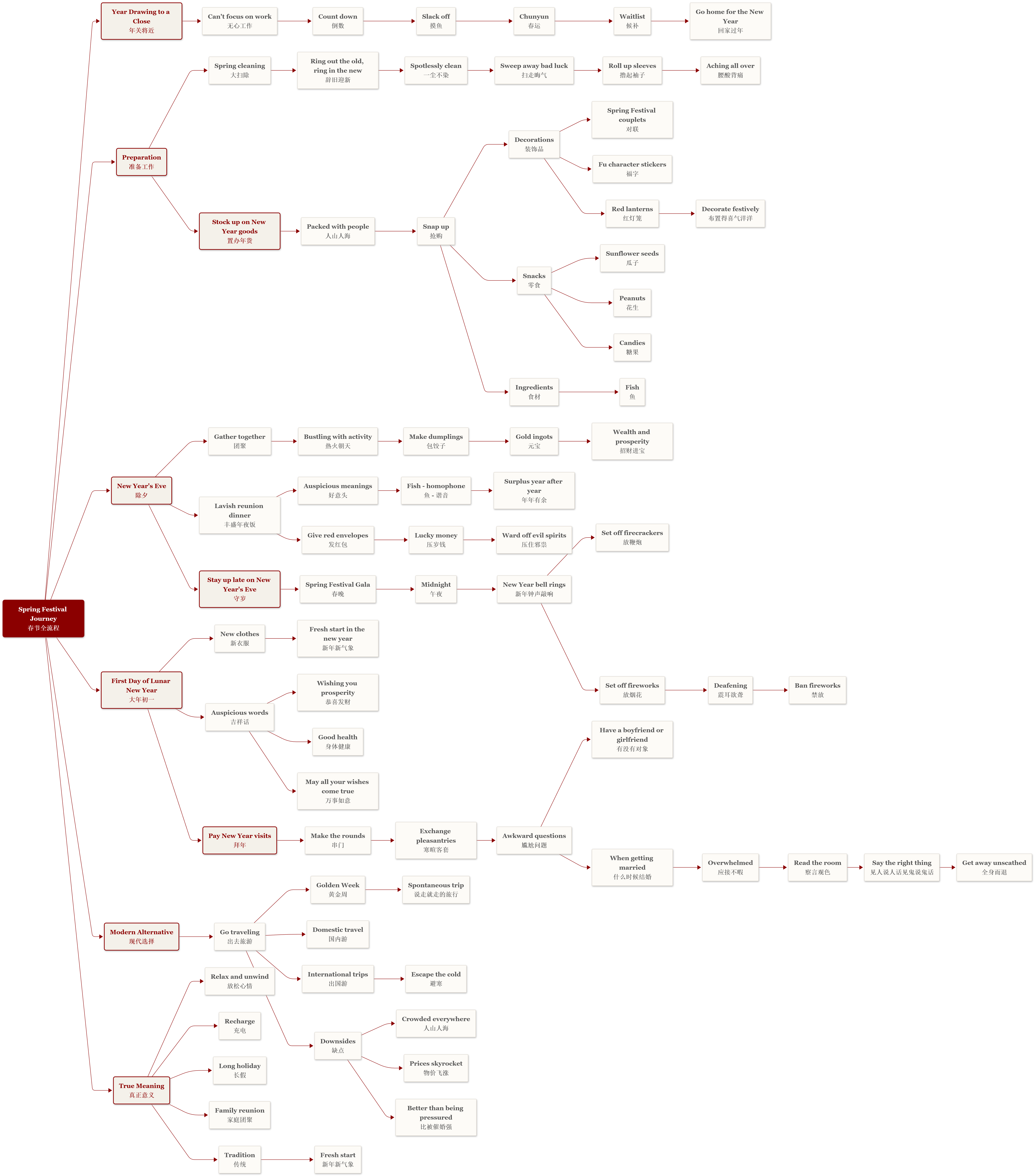
🧠 思维导图
💡 复习一下~